
Exploring the AI Industry Beyond the Classroom
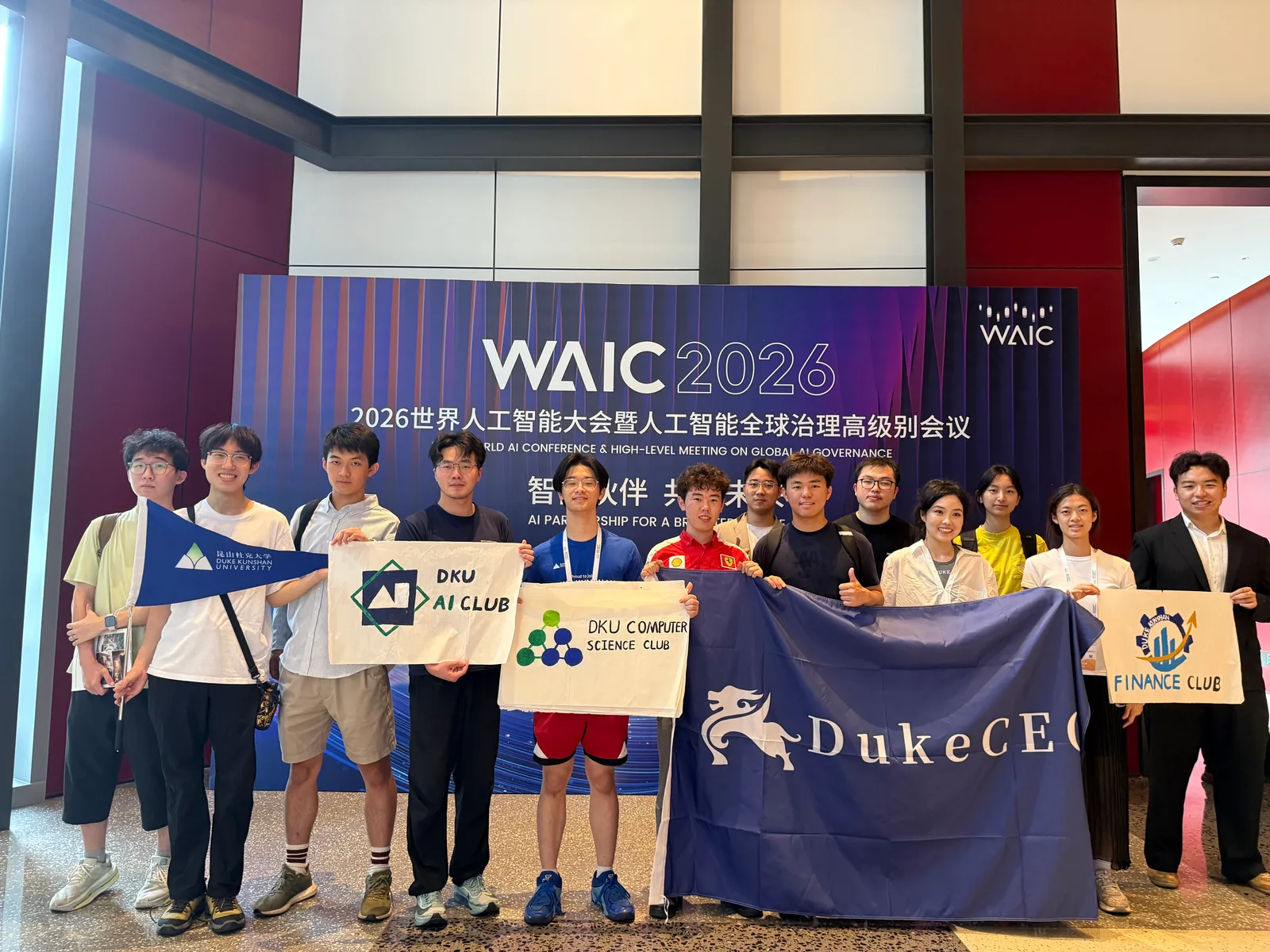
On July 18, 2026, the DKU Computer Science Club organized a student field trip to the World Artificial Intelligence Conference (WAIC 2026) in Shanghai. Joined by students from the DKU AI Club and Finance Club, with support from DKU Career Services, the group spent the day exploring how artificial intelligence is being developed and deployed across computing infrastructure, finance, robotics, content creation, and consumer products.
WAIC 2026 brought together researchers, technology companies, startups, and public institutions under the theme of building an intelligent future through global collaboration. For our students, the conference provided a rare opportunity to move beyond product announcements and examine the complete AI value chain: the chips and computing clusters that train models, the model architectures that make new capabilities possible, and the applications that ultimately reach users.
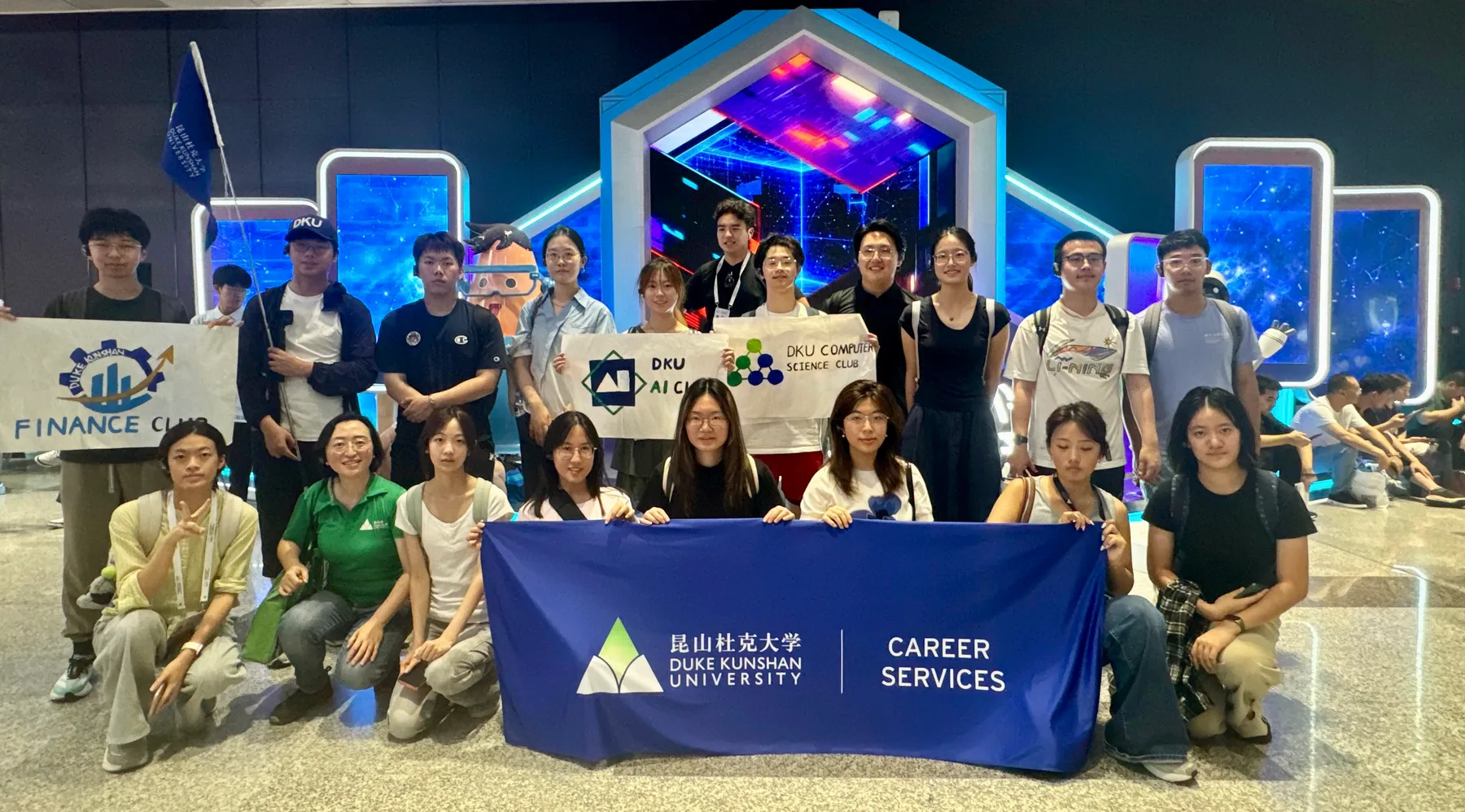
Rather than treating the visit as a simple exhibition tour, students were encouraged to ask a set of practical questions at each booth: What problem is this technology solving? What does the underlying system look like? How is it evaluated? What prevents it from becoming a reliable product? And where could students contribute through research, engineering, design, or entrepreneurship?
Ant International: AI Agents Enter Global Commerce
At Ant International, students learned how AI is being introduced into cross-border payments, merchant services, risk management, and international commerce. The most important shift was not simply adding a chatbot to an existing financial product. Instead, the company is preparing for a future in which software agents may search for products, negotiate choices, initiate transactions, and coordinate payment workflows on behalf of users.
That future creates new engineering questions. A payment system must distinguish between the user, the AI agent, and the merchant; verify that an agent is acting within the user's instructions; protect financial credentials; and preserve human control over high-risk actions. Ant International's work on agentic payment infrastructure demonstrated that useful agents require much more than language generation—they also depend on identity, authorization, security, compliance, and robust connections to existing financial systems.
For students interested in fintech, the booth showed how AI engineering intersects with cybersecurity, distributed systems, product design, and regulation. It was a reminder that the most difficult part of deploying an agent is often not making it intelligent, but making its actions trustworthy.
Ant Group: From Foundation Models to Embodied Intelligence
The Ant Group exhibition offered a broader view of AI across digital services and embodied systems. One highlight was the company's work on Lingbo, an embodied-intelligence foundation model designed to connect visual perception, spatial reasoning, planning, and physical control.
Embodied AI introduces challenges that are fundamentally different from text-only interaction. A robot must understand three-dimensional environments, maintain awareness over long sequences of actions, react to unexpected changes, and translate high-level instructions into precise movements. Errors are no longer limited to an incorrect sentence: they can become failed tasks or unsafe physical actions.
The demonstrations gave students a useful framework for thinking about robotics and multimodal agents. Progress depends on the model, but also on sensors, simulation environments, control systems, training data, evaluation methods, and hardware. The visit helped connect concepts from computer vision and reinforcement learning to systems operating in the physical world.
Baidu and Kunlunxin: The Infrastructure Beneath Intelligence
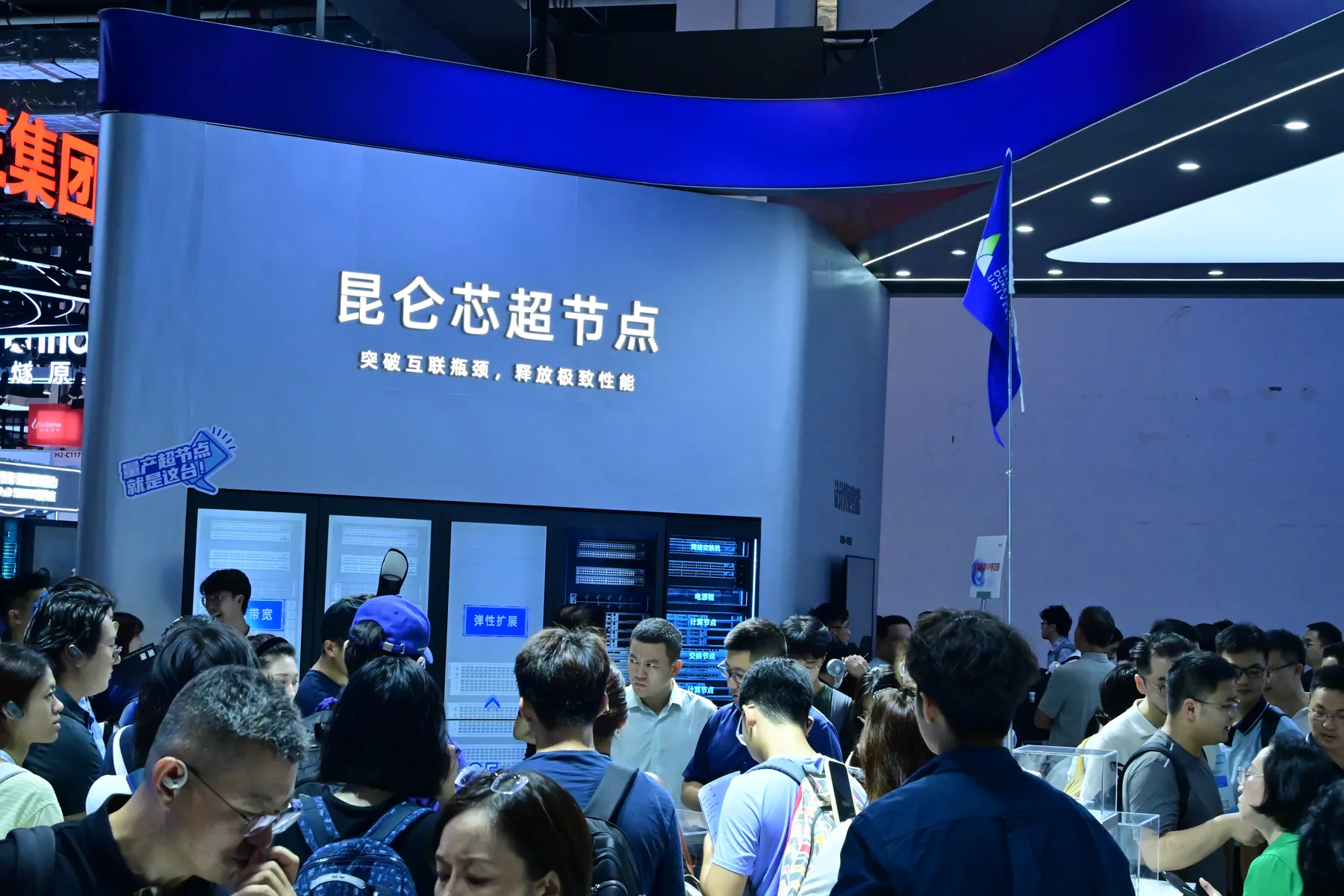
At the Kunlunxin exhibition, students moved from AI applications to the infrastructure required to support them. The booth presented an AI supernode architecture built around tightly interconnected accelerators, high-bandwidth communication, memory systems, and cluster-level software.
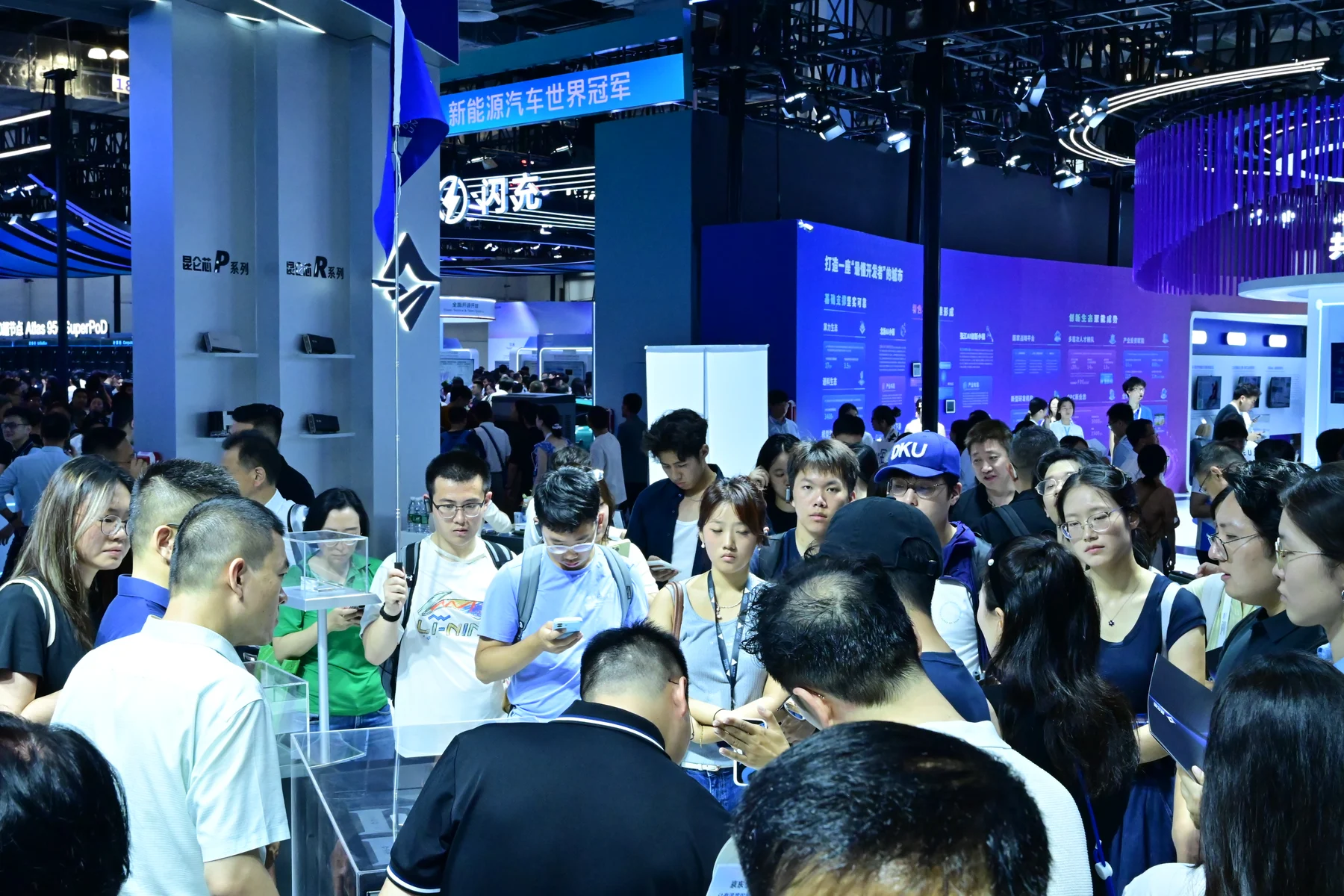
The visit made one point especially clear: modern model performance cannot be understood by looking at a single chip. Training and serving large models require coordination across hundreds or thousands of processors. Communication bandwidth, memory movement, scheduling, fault tolerance, and software compatibility may become just as important as raw computation.
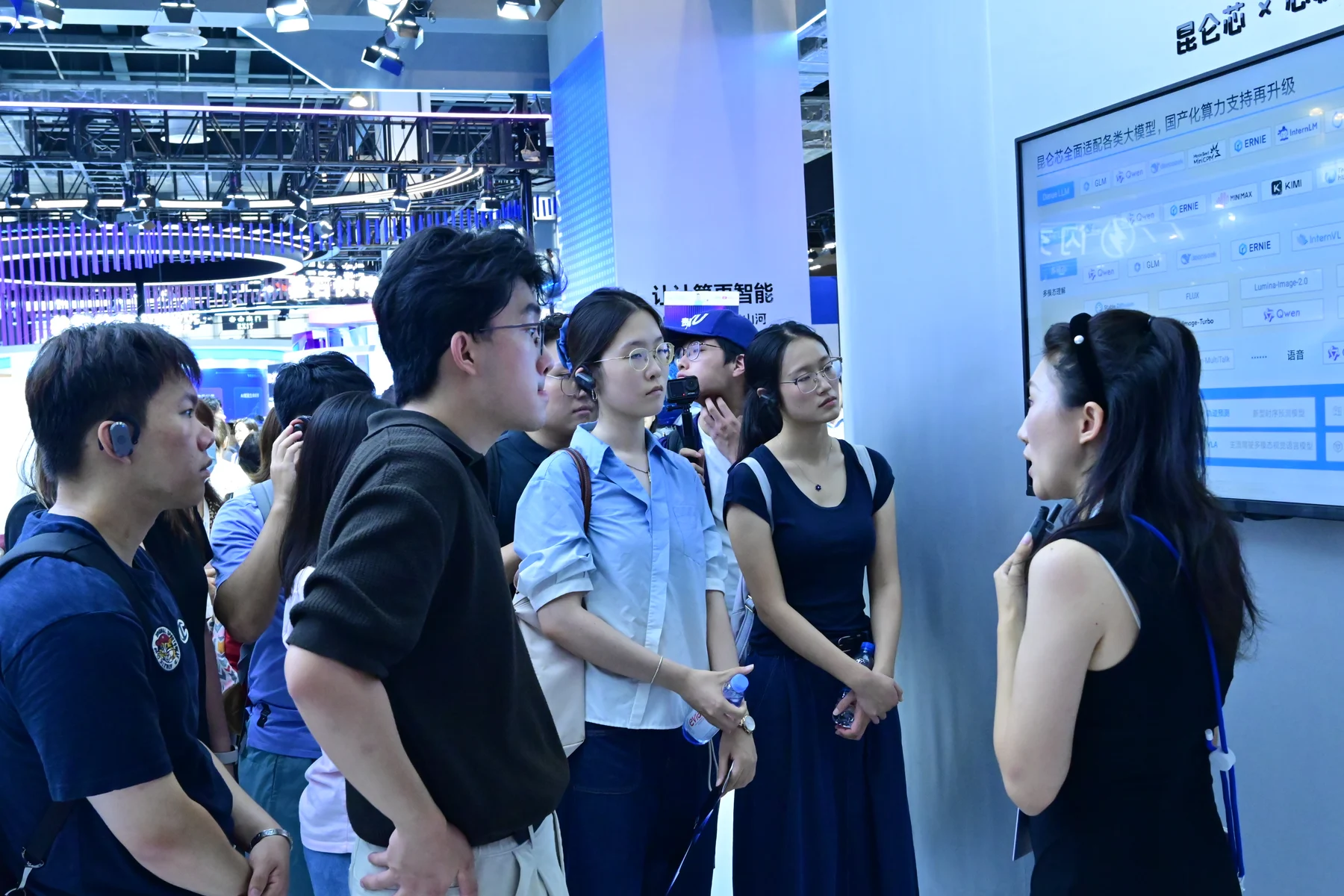
Kunlunxin's roots in Baidu's AI computing ecosystem also demonstrated why major AI companies increasingly invest across the full stack. Search, autonomous driving, cloud services, and foundation models all create different workloads, but each depends on reliable access to large-scale computing. Students interested in computer architecture and systems engineering were able to see how hardware decisions directly shape the models and products built above them.
Moore Threads: Building a Full-Stack GPU Ecosystem
The group also visited Moore Threads, where the focus extended from general-purpose GPUs to complete AI computing systems. Its MUSA architecture and computing products illustrated the importance of building a software ecosystem around hardware rather than treating an accelerator as an isolated component.
At WAIC 2026, Moore Threads presented AI computing solutions covering cloud, edge, and device environments. This range helped students compare the different requirements of centralized model training, local inference, enterprise deployment, and personal AI workstations. A cloud cluster prioritizes scale and throughput, while an edge system may prioritize latency, power consumption, privacy, or operation without a constant network connection.
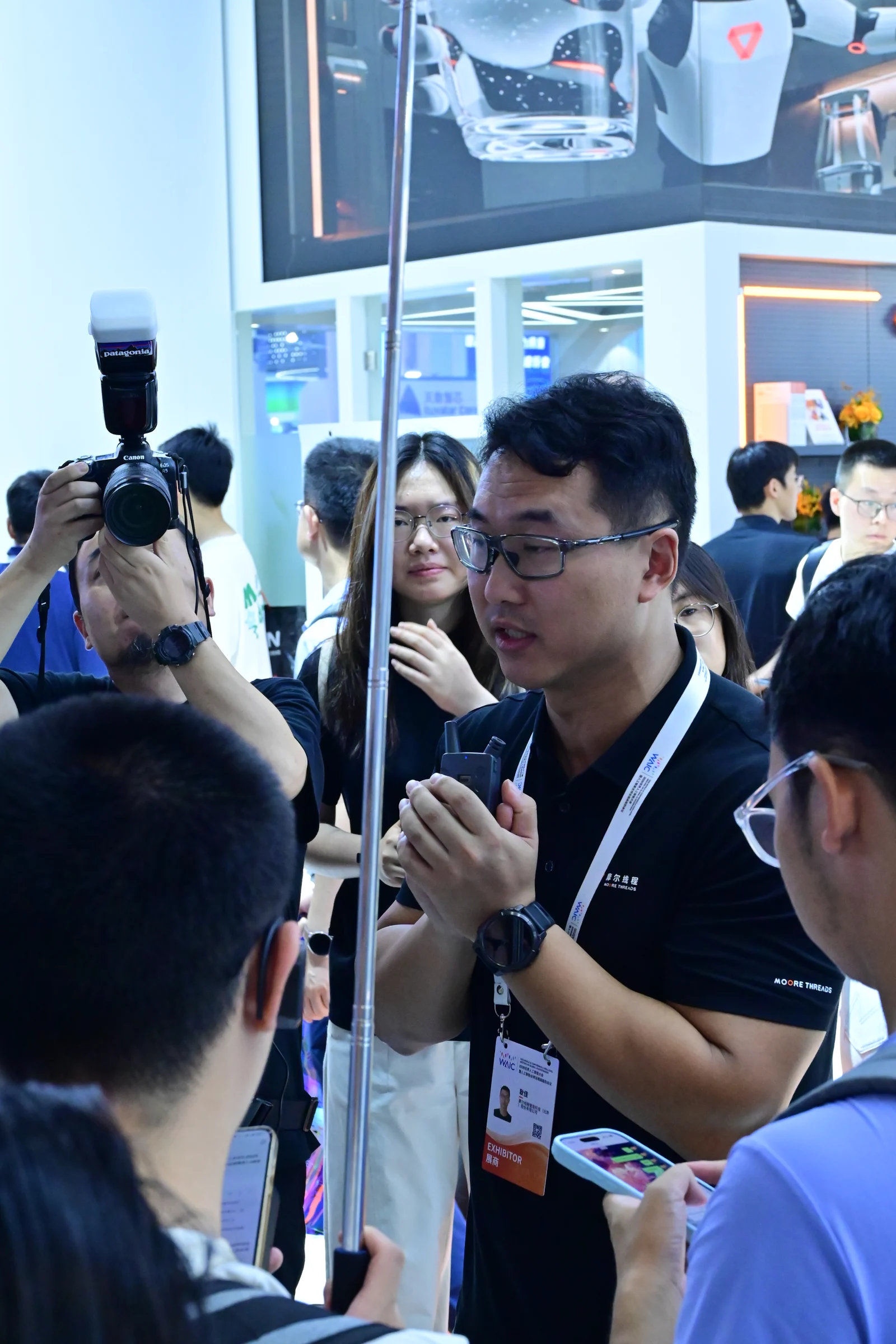
For students, this was an introduction to the larger engineering ecosystem behind AI: compilers, drivers, distributed training frameworks, inference engines, monitoring tools, and developer support. Strong hardware matters, but adoption ultimately depends on whether developers can build, optimize, and deploy applications efficiently.
Kimi and Moonshot AI: Multimodal Models Become Working Agents
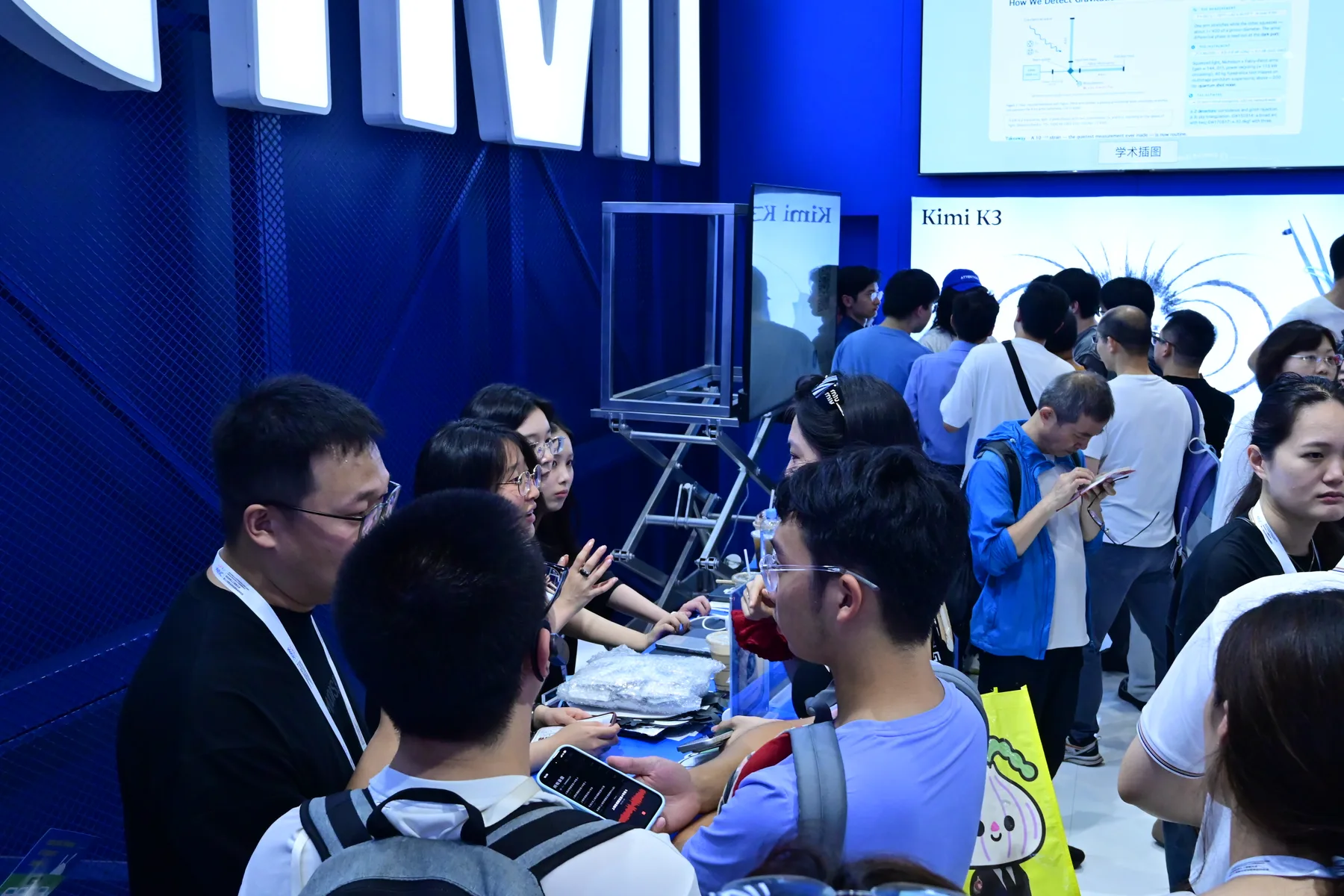
At the Kimi exhibition, students explored the latest work from Moonshot AI, including the Kimi K3 model and its agent-oriented applications. Kimi K3 combines long-context reasoning, coding, visual understanding, and knowledge work, reflecting the broader transition from models that answer individual prompts to systems that can complete longer, multi-step tasks.
The most valuable lesson was the importance of maintaining coherence over an extended workflow. A useful coding or research agent must inspect information, choose tools, revise its approach, verify intermediate results, and preserve the user's objective across many steps. This requires more than benchmark performance: it also requires memory management, tool integration, feedback loops, and interfaces that allow people to understand and correct the agent's actions.
For CS Club members preparing to build AI applications, the booth demonstrated why narrowly defined agents can be more useful than an overly general assistant. A successful product begins with a clear workflow and evaluation standard, then selects the model and tools needed to complete it reliably.
Bilibili: AI Meets Content and Community
The Bilibili exhibition provided a more playful view of AI through interactive content and an AI-themed “milk bar” presentation. Behind the entertainment-oriented experience was an important product question: how can AI support creators and communities without removing the personality, context, and human connection that make content meaningful?
Students considered how AI can assist with ideation, editing, translation, recommendation, visual production, and audience interaction. At the same time, creator platforms must address attribution, authenticity, moderation, intellectual property, and the possibility of low-quality generated content overwhelming human work.
This part of the visit showed that AI products should not be evaluated only by technical capability. Their success also depends on culture, community norms, user trust, and whether they improve the creative process rather than simply automate it.
Google: A Global Perspective on Models and Developer Platforms
At Google, students examined a global AI ecosystem centered on the Gemini family of models, multimodal reasoning, developer tools, and agent-building platforms. The exhibition offered a useful comparison with the Chinese companies visited throughout the day: although the organizations differ in products and markets, many are converging on similar technical goals—models that can understand multiple forms of information, use tools, write and execute code, and assist with complex knowledge work.
Google's work also highlighted the relationship between model research and developer infrastructure. A powerful model becomes more useful when developers can connect it to data, evaluate it, deploy it securely, and observe how it behaves in production. For students, this reinforced the value of learning APIs, cloud deployment, evaluation, and software engineering alongside machine learning theory.
From Impressive Demos to Complete Products
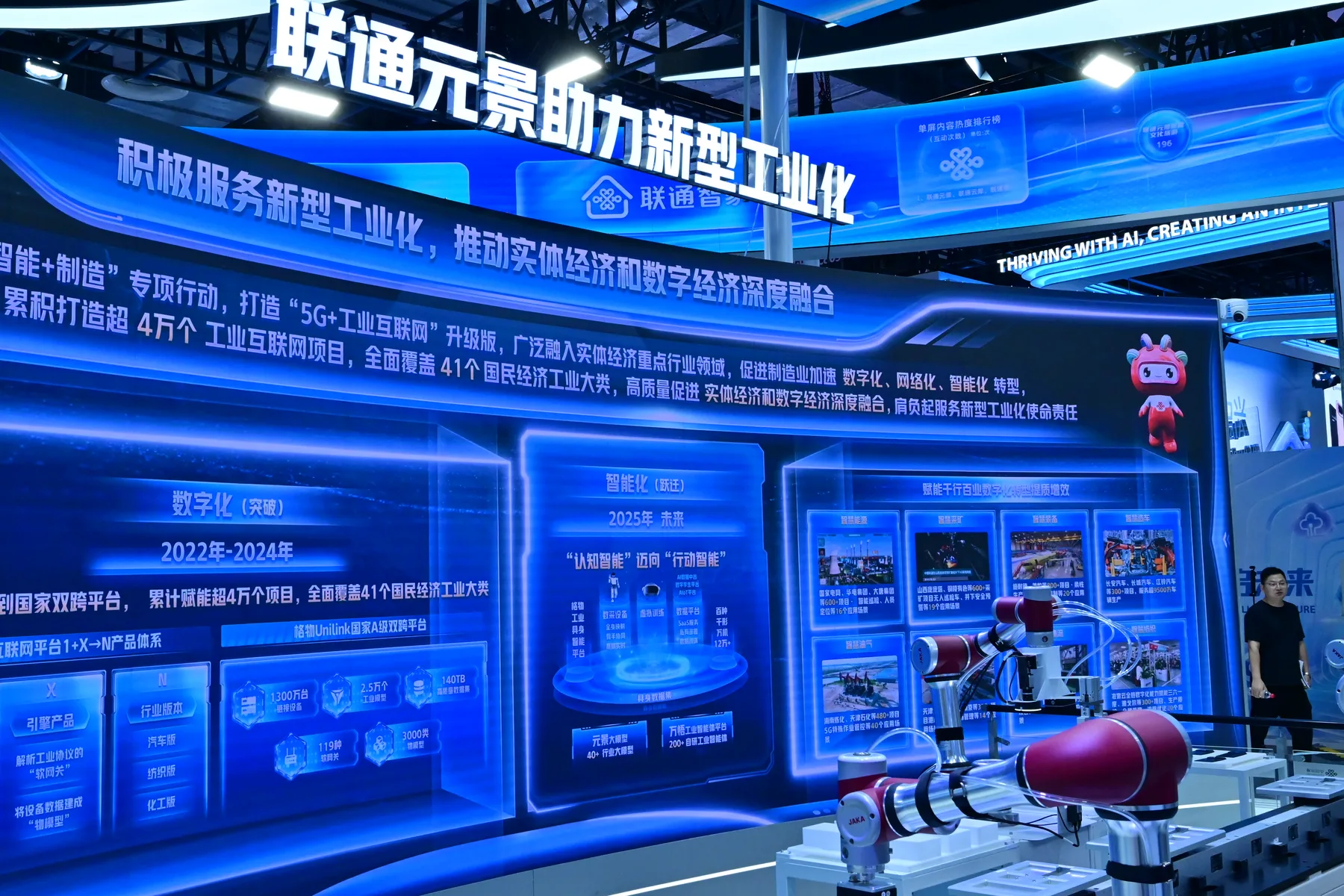
Across the conference, the group observed a common transition in the AI industry. Competition is moving beyond who can produce the most impressive isolated model response. Companies are increasingly focused on complete systems that combine models with computing infrastructure, tools, data, security, user interfaces, and domain expertise.
This insight is directly relevant to the future direction of DKU Computer Science Club and HackDKU. A strong student project should not begin with “Which model should we use?” It should begin with a real problem, a clearly defined user, and an understanding of the environment in which the solution must operate. The model is one component of the product—not the product itself.
The WAIC 2026 field trip gave students a clearer view of possible paths in AI, including model research, systems engineering, chip design, developer platforms, fintech, robotics, product development, and creative technology. More importantly, it transformed abstract industry trends into concrete technical questions that students can continue exploring through future workshops, projects, internships, and HackDKU.