

By Wenxin Xu, Class of 2029, Majoring in Applied Math and Computational Science; Yanpei Yu, Class of 2028, Majoring in Data Science; Zhonghan Dai, Class of 2028, Majoring in Computer Science; Tianrui Gu, Class of 2029, Majoring in Applied Math and Computational Science | Advised by Professor Luyao Zhang
A Week-Long Sprint on Ethics and AI
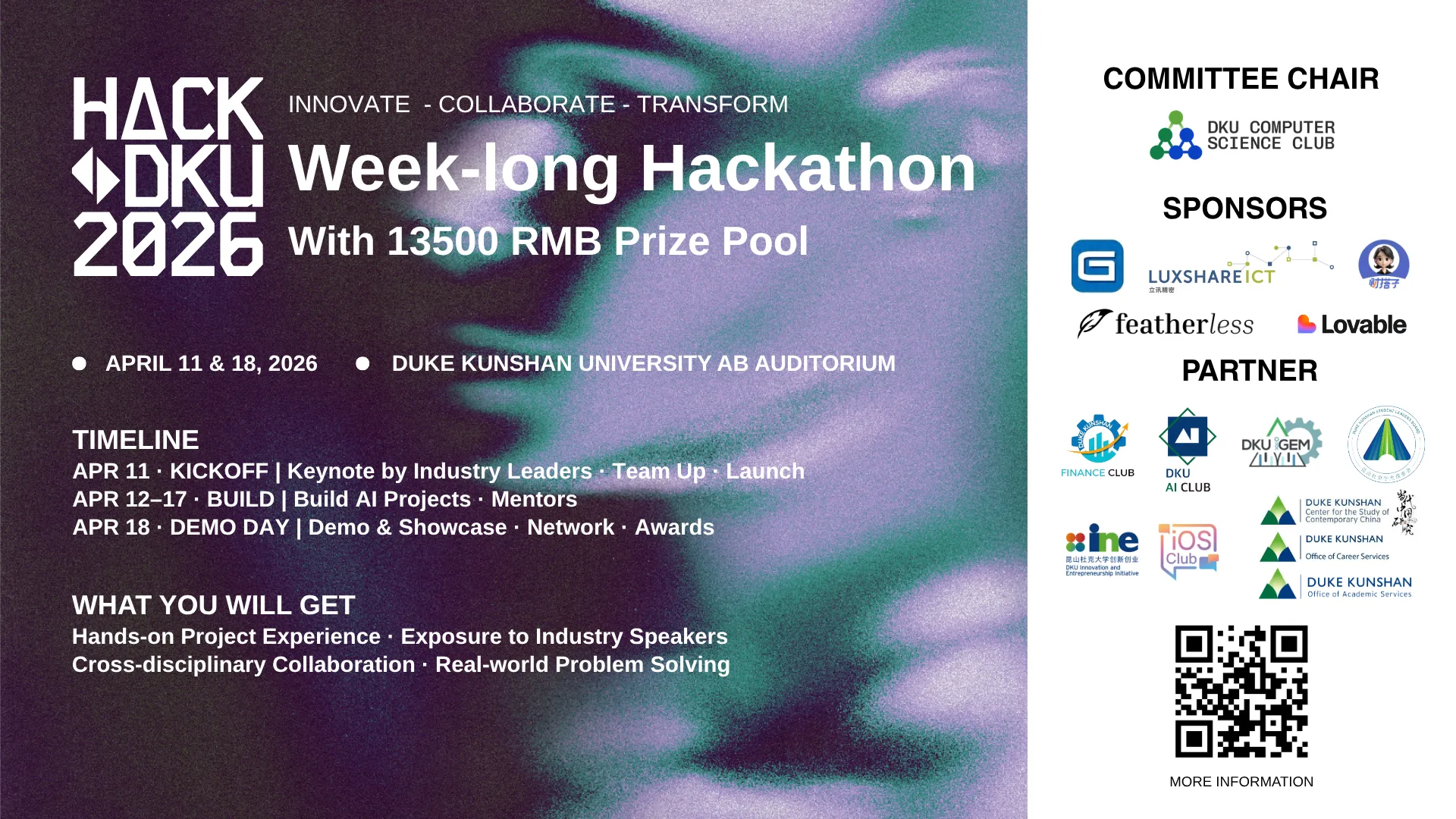
**From April 11 to April 18, 2026, HackDKU 2026 (https://hackdku.dkucs.com/) —the third annual edition of this cross-disciplinary innovation competition since its 2024 debut—brought together students from diverse disciplines and universities across China to explore the societal implications of artificial intelligence, empowering globally through locally grounded innovation. While previous editions advanced distinct themes in service of global good, this year's gathering centered specifically on "Ethics and AI," challenging participants to interrogate the moral dimensions of technological progress. Hosted by the DKU Computer Science Club, and led by organizing committee chairs Anar Nyambayar, Yanpei (Yolanda) Yu, and Guangzhi (Allen) Su, the initiative was guided by the enduring philosophy of "Innovate, Collaborate, Transform." Campus co-organizing support from the Digital Technology and Society Cluster at the Center for the Study of Contemporary China (CSCC) and the DKU Innovation and Entrepreneurship Initiative (InE), the Office of Career Services, and the Office of Academic Services, alongside partner student organizations including the DKU AI Club, DKU iOS Club, iGEM Club, and Finance Club, fostered an interdisciplinary ecosystem bridging technological innovation with ethical and social inquiry. The event departed from the traditional overnight hackathon model, adopting a week-long sprint format with mandatory milestone supervision to ensure rigorous ethical reflection alongside technical development.
The week-long competition process witnessed HackDKU's unique contribution: a cross-institutional platform that integrates technological innovation, collaborative creation, and ethical thinking. By focusing on AI ethics-oriented problem-solving and receiving guidance from professional mentors, the event enhanced both relevance and trust among participants, reflecting DKU’s commitment to meaningful innovation and rooted globalism in practice.
Opening Remarks: Starting the Week on 4.11
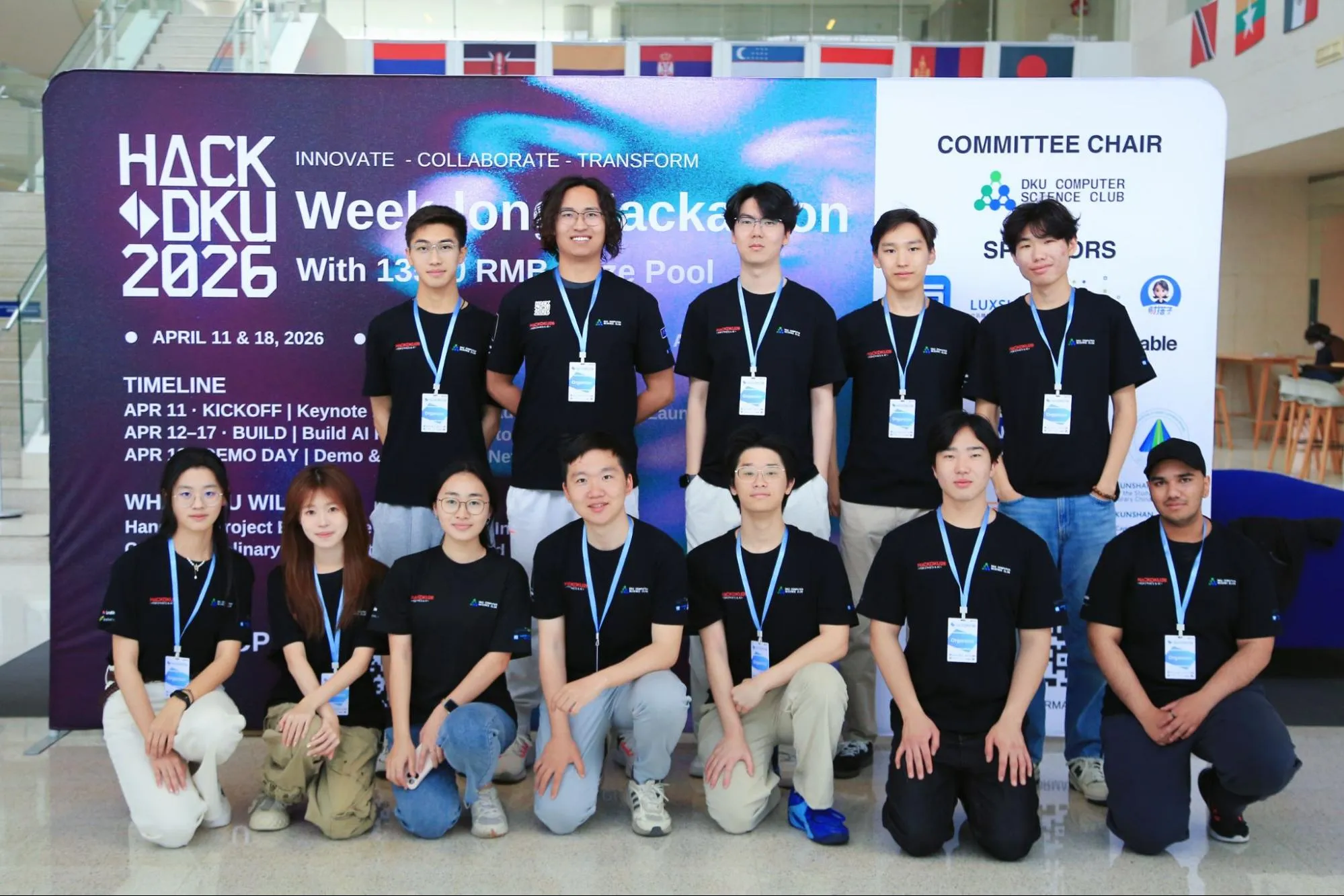
The HackDKU journey began with a series of early-stage activities designed to introduce the competition, connect participants across disciplines, and help students refine their ideas. On April 11, the official opening session was successfully held at the AB Auditorium, officially kicking off the week-long event. Through guest addresses and thematic interpretations, this session served as the official launch, clarifying the competition direction and laying a solid foundation for subsequent project development, iteration, and final presentation.
Morning Session: Grand Opening Ceremony
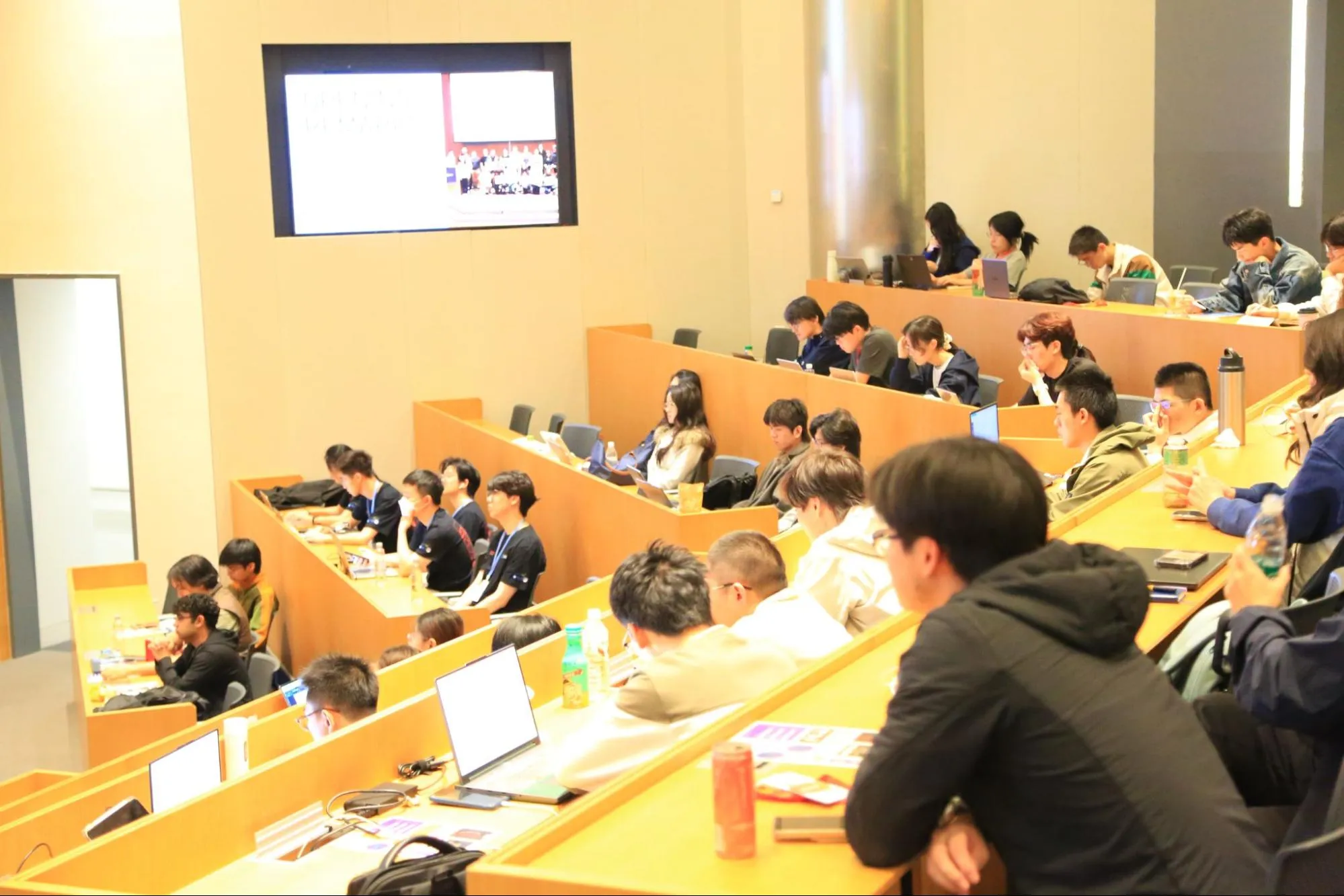
The competition officially launched on April 11 at the AB Auditorium. The morning session was anchored by a profound keynote from Dean Christopher, who grounded the hackathon in a spirit of thoughtful, ethical inquiry.
Utilizing a classic analogy from The Hitchhiker’s Guide to the Galaxy, Dean Christopher highlighted the moment the supercomputer "Deep Thought" provided the answer “42” to the ultimate question of life, yet the question itself remained unknown. With this metaphor, he stressed that in an era where AI makes "answers" abundant, the truly scarce resources are good questions, careful judgment, and focused attention. He warned that ethical failure in AI rarely begins with a malicious solution but with a poorly defined problem
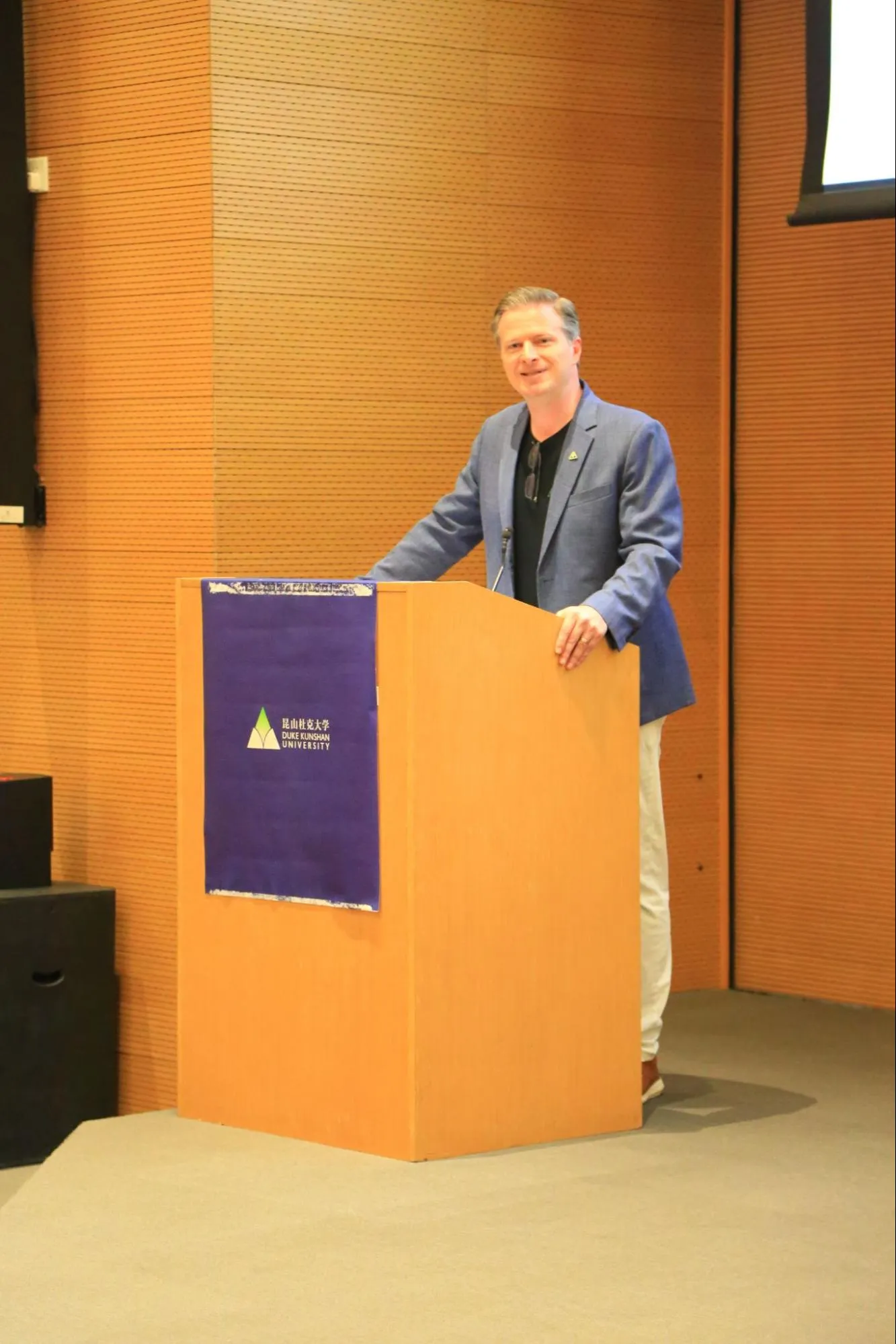
Dean Christopher challenged participants to resist the temptation of immediate prototyping. Instead, he urged them to deeply frame their problems by reflecting on critical ethical questions: Who benefits? Who might be harmed? What are the long-term consequences of scaling these solutions? He emphasized that human judgment—the capacity to decide which values matter—is an irreplaceable asset that no algorithm can replicate.
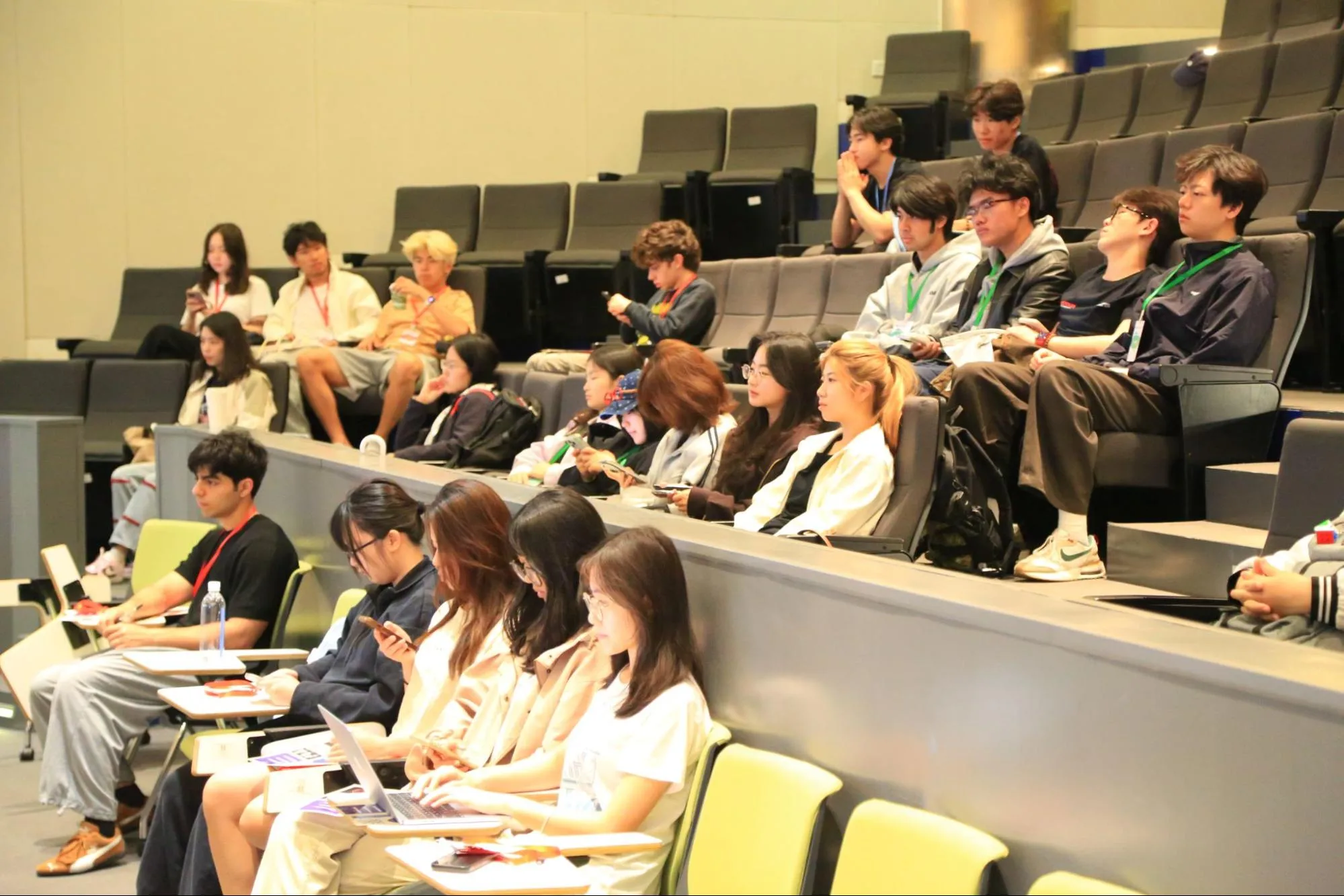
Following the dean's address, Anar Nyambayar, President of the DKU Computer Science Club, delivered a thorough introduction to the week's structure. He reaffirmed that the central theme of "Ethics and AI" would guide every project. Nyambayar formally introduced the four specialized tracks:
- Finance Track: Designing ethical solutions for transparency, fairness, and financial inclusion.
- Health Track: Building tools that prioritize patient safety, data security, and clinical validity.
- Education Track: Developing responsible AI that upholds academic integrity and ensures fairness.
- Luxshare Track: Creating AI applications for smart manufacturing, automation, and digital twins.
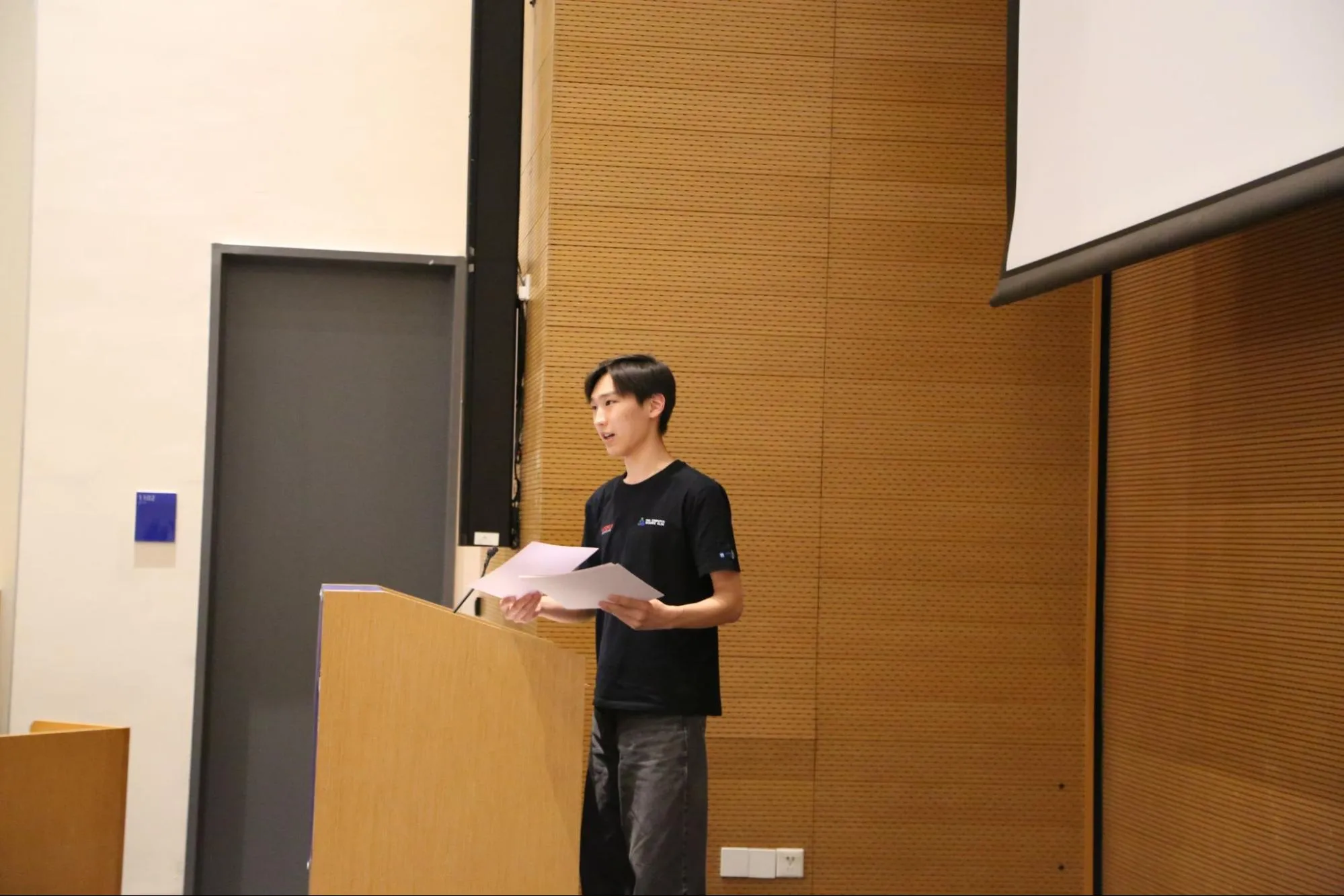
Nyambayar explained that the transition to a week-long sprint format was designed to ensure high-quality development through mandatory milestones, such as wireframe submissions. This structure, supported by Featherless AI, aimed to help students turn creative ideas into real-world impact while expanding their professional networks.
Afternoon Session: Keynote Speeches Empowering Ethical AI Innovation
The afternoon featured two distinguished keynote presentations from leading scholars and industry experts, delivering profound, forward-looking insights that combined Eastern philosophical wisdom, cutting-edge AI trends, and practical ethical guidance for all participants.
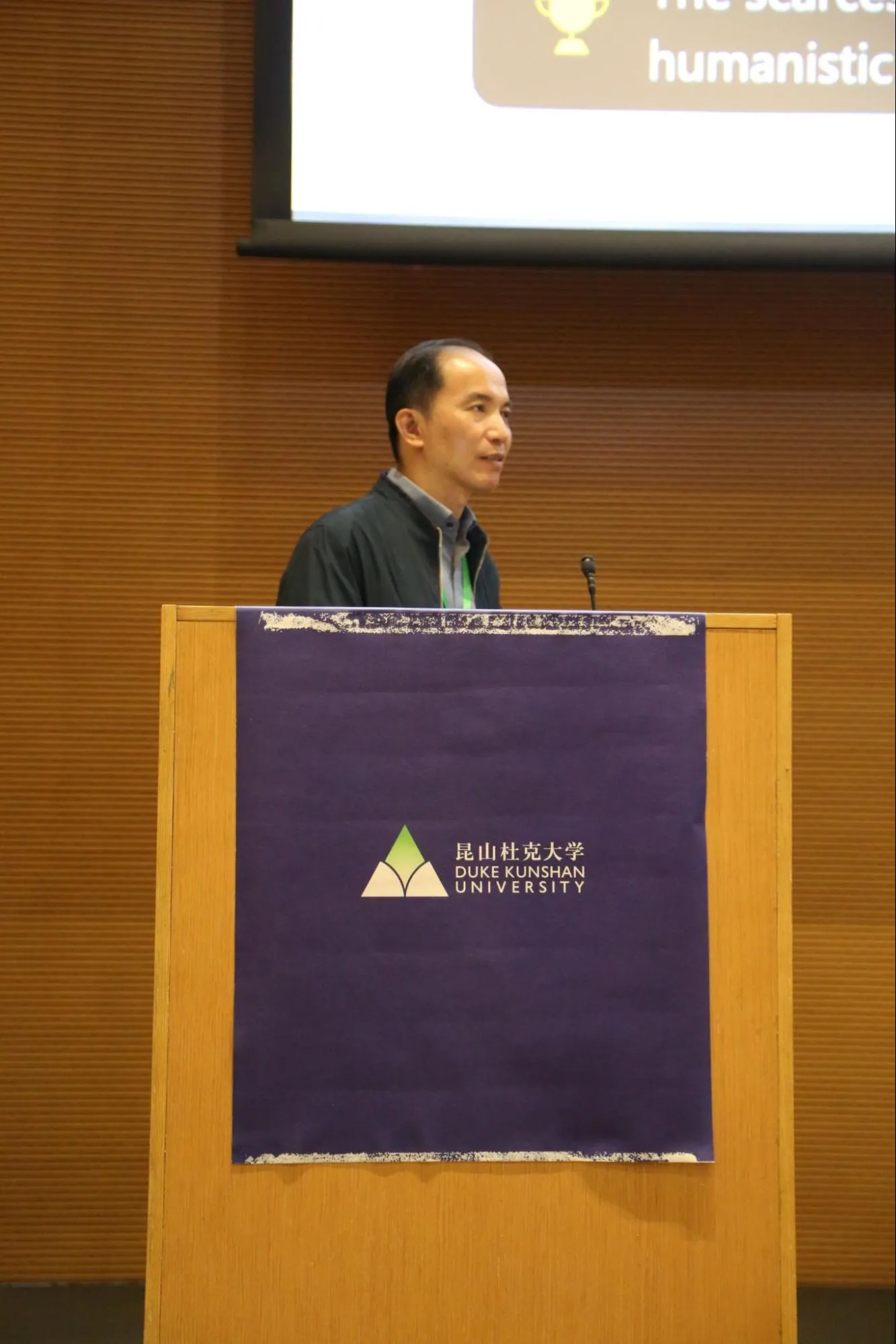
Dr. Yimin Zhang, Chief Scientist of Intelligent Systems at Shanghai Jiao Tong University’s Advanced Integration Research Institute and former Chief Scientist and Principal Engineer at Intel Labs China, delivered a profound keynote titled "AI Ethics: From Confucian Wisdom to ESG and Responsible AI". By integrating the core virtues of Confucianism—Ren, Yi, Li, Zhi, and Xin—with modern Environmental, Social, and Governance (ESG) principles, Dr. Zhang systematically deconstructed typical AI ethical risks, such as algorithmic bias, data privacy breaches, and accountability dilemmas. He advocated for an AI development approach strictly grounded in people-orientation, fairness, transparency, and sustainability. Furthermore, he emphasized the critical importance of integrating liberal arts with STEM disciplines and fostering human-machine collaboration. His insights equipped participants with a unique, Eastern wisdom-based ethical framework to guide their responsible AI innovation throughout the hackathon.
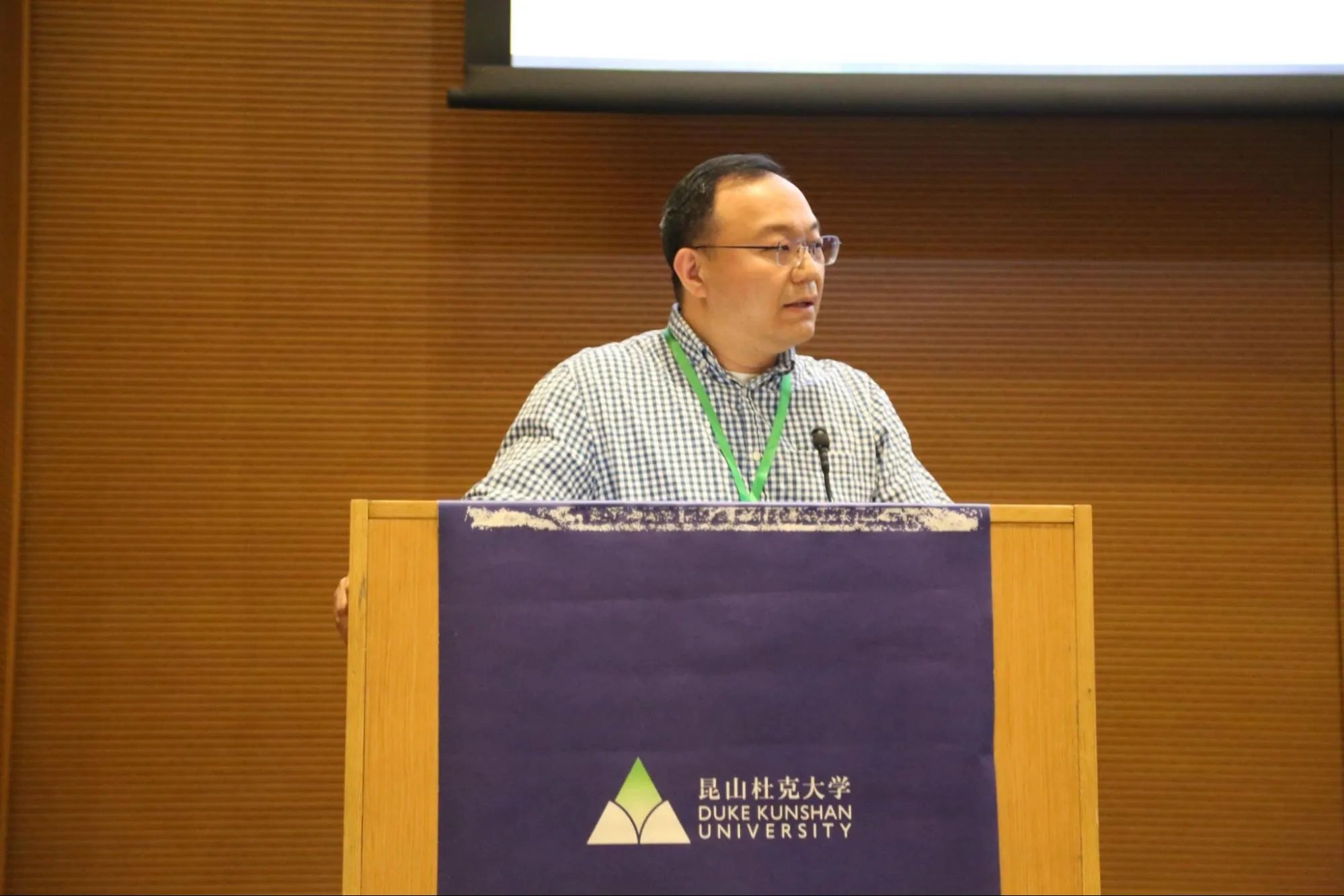
Following this ethical grounding, Prof. Haofen Wang, a Tenured Professor at Tongji University, provided a forward-looking perspective in his speech, "Innovation in the Age of AI Exploration and the Rise of the Super Individual". Prof. Wang traced the evolution of foundation models and identified four core trends shaping the future of AI: agentization, multimodal fusion, efficient training and inference, and autonomous evolution. He detailed how AI Agents are fundamentally reshaping human-machine interaction into an intent-centric model. Additionally, he analyzed how the rapid decrease in inference costs is accelerating the widespread adoption of AI-native applications. Concluding his session, Prof. Wang forecast the emergence of AI-empowered "super individuals" and one-person companies (OPCs), thereby offering participants cutting-edge technical directions to inform their project designs and innovative practices.
Workshop on 4.16: On-Device Intelligence – Building Real-World AI Apps Across the Apple Ecosystem
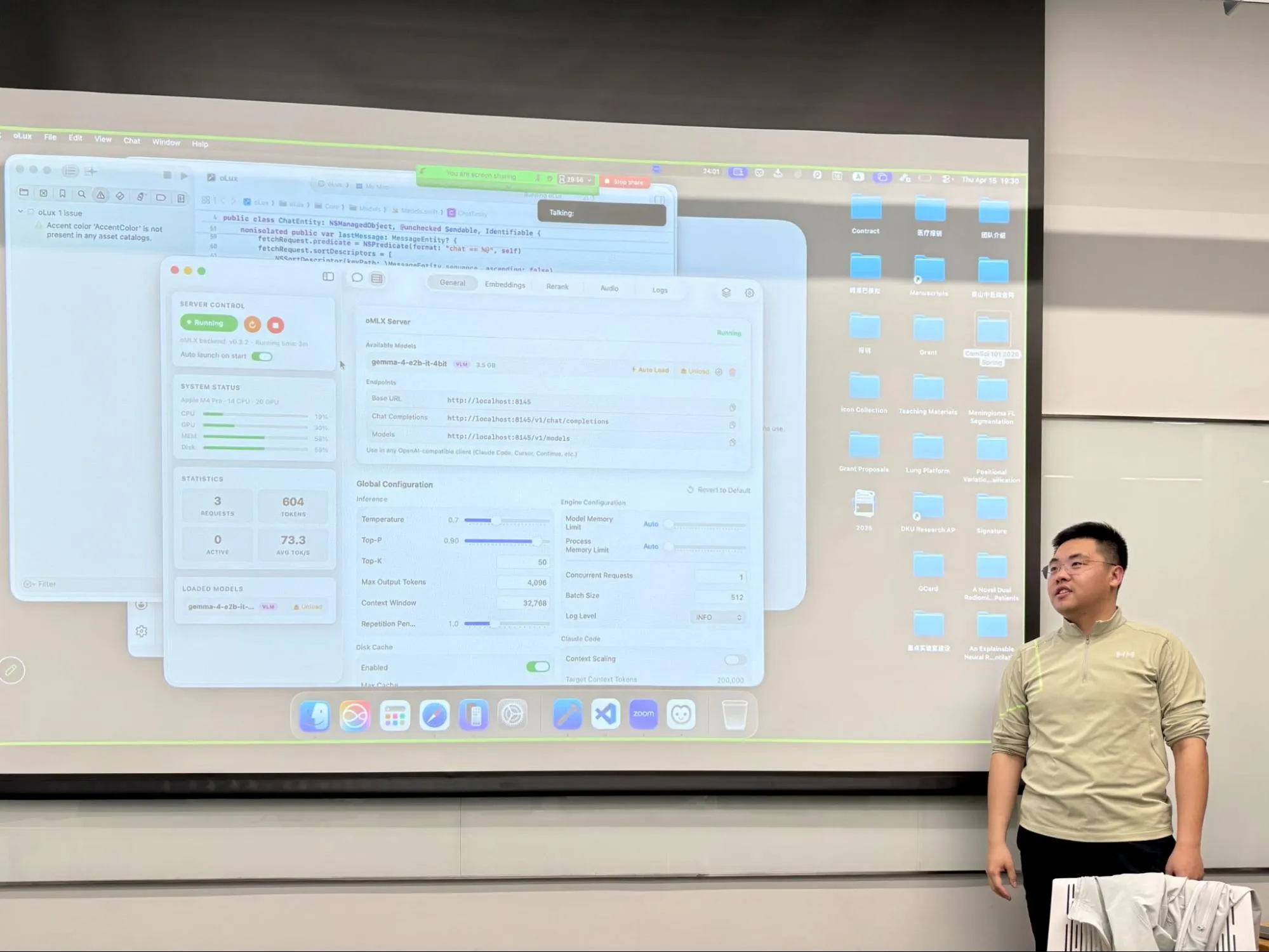
As part of the curated technical support series for the hackathon, Prof. Zhenyu Yang, Research Assistant Professor of Medical Physics at DKU, led a hands-on workshop titled On-Device Intelligence: Building Real-World AI Apps Across the Apple Ecosystem on April 16. The session offered participants an end-to-end journey into developing practical AI applications natively on Apple platforms, directly aligning with the core theme of Ethics and AI.
Focusing on the case study of RecordCraft—a local AI-powered mobile app enabling on-device audio recording, transcription, and summarization without cloud reliance—Prof. Yang walked students through every stage of app creation, from initial design and technical implementation to final launch. He demystified the technical and product-oriented challenges of the Apple ecosystem, highlighting the unique advantages of on-device intelligence. By emphasizing enhanced data privacy, reduced latency, and offline functionality, he provided actionable insights that empowered participants to bridge the gap between conceptual AI ethics and tangible, privacy-first development practices.
Closing Day: Presentation and Awarding on 4.18
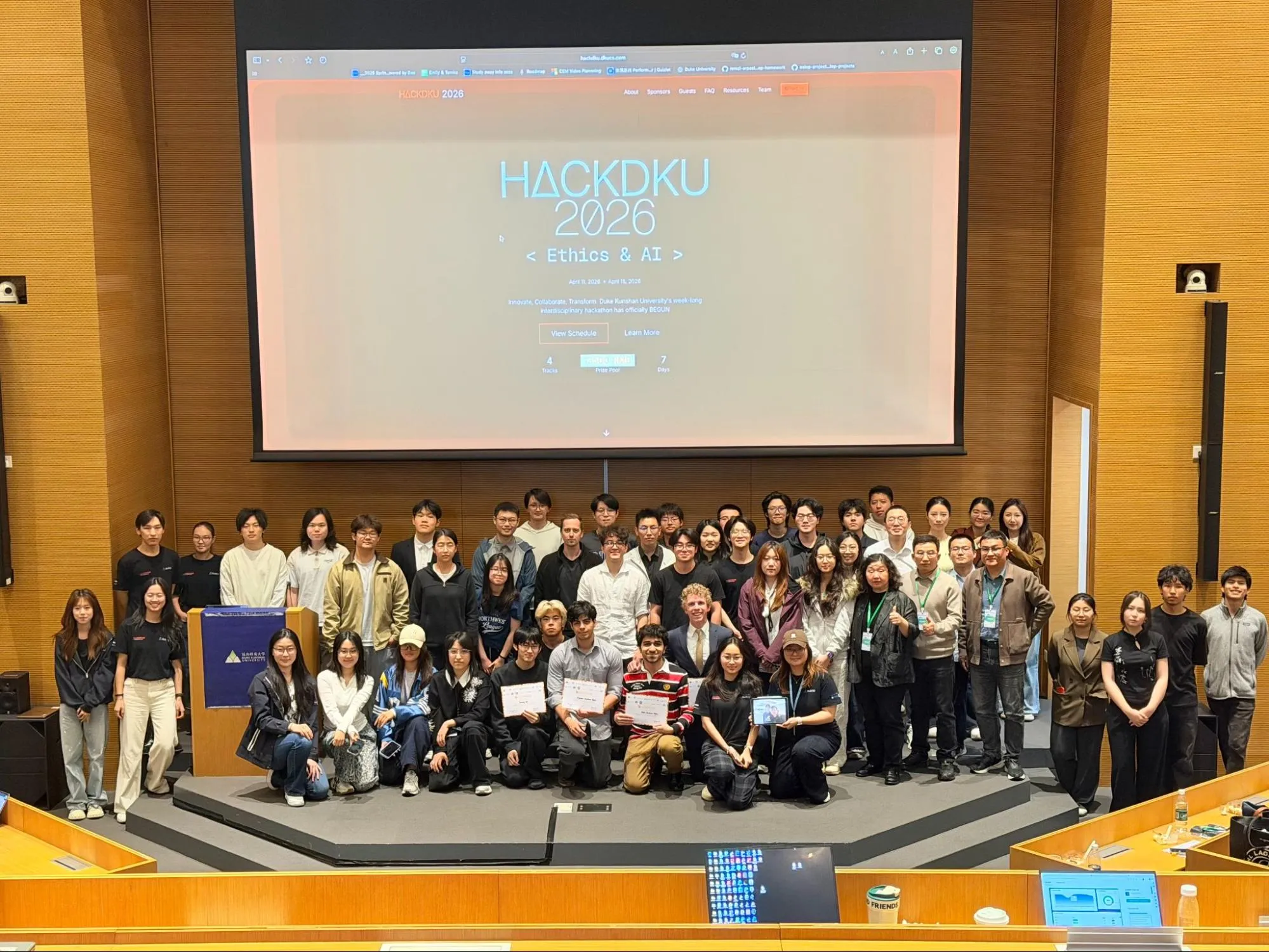
April 18 marked the culmination of the HackDKU 2026 journey. Participating teams took the stage to deliver their final project presentations, showcasing innovative solutions centered on the theme of "Ethics and AI" across the Finance, Health, Education, and Luxshare-sponsored Smart Manufacturing tracks. Following a comprehensive evaluation based on feasibility, problem insight, technical implementation, design, and presentation quality, the final results highlighted outstanding student achievement.
In the regular tracks, CFA (Finance), Labby (Education), and BigEggplant (Health) emerged as the winning teams. For the specialized Luxshare Track, Team H secured first place, followed by ByteForge in second, and PROMETHEUS in third. The award ceremony not only celebrated these outstanding innovation outcomes but also fully demonstrated the participants’ rigorous exploration of responsible AI and their spirit of interdisciplinary collaboration.
Strengthening the Innovation Ecosystem: Acknowledgments
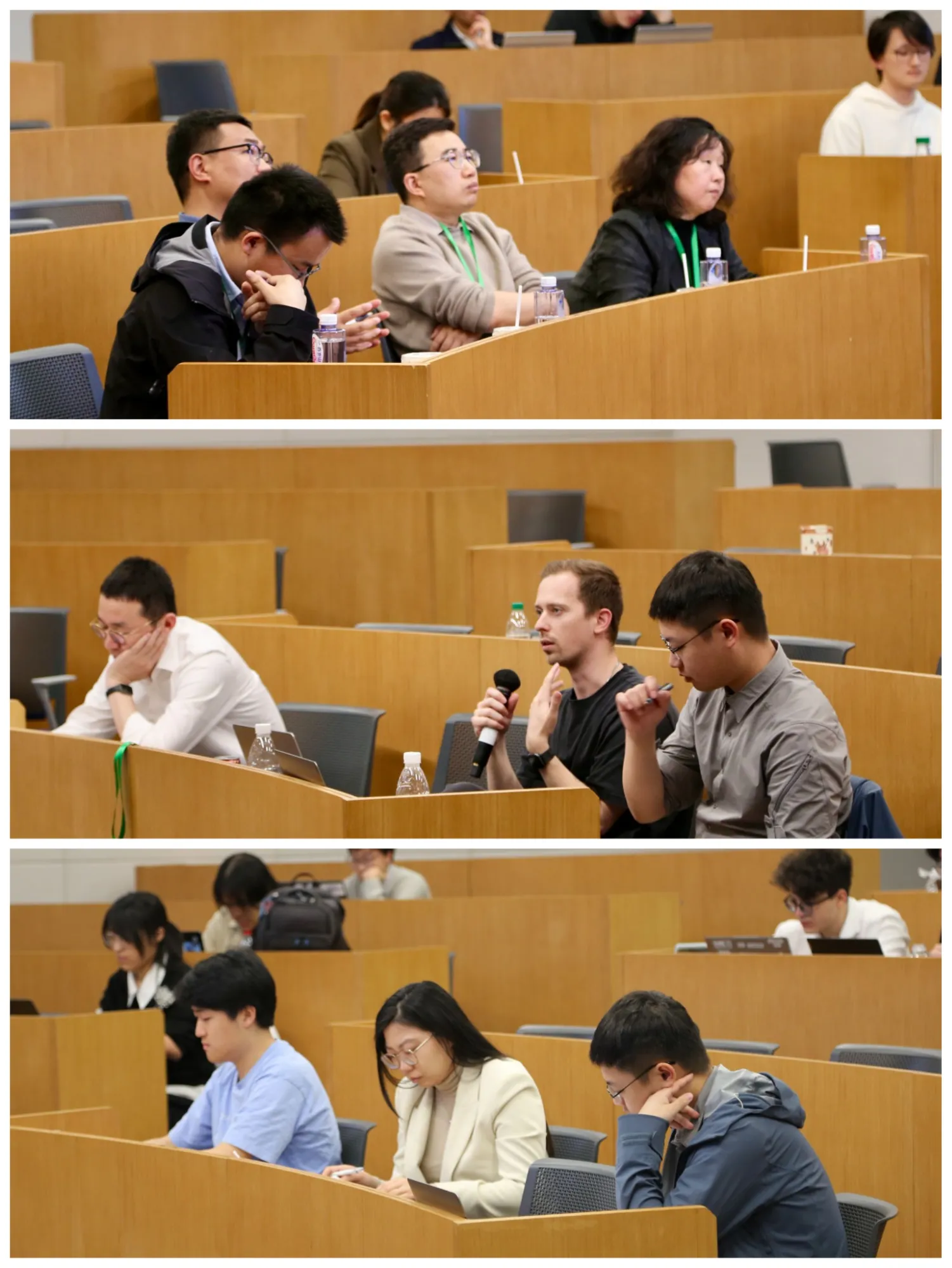
On behalf of the HackDKU 2026 Organizing Committee, we sincerely thank all our distinguished judges: Lu Min, Executive Director and Head of R&I at Suzhou Zhengyuan Xinyi Asset Management; Nick Ponomarev, Senior Investment Analyst at ORBIT Startups; Tianyi Zhang, specializing in medical physics and AI system development at Duke Kunshan University; and four expert judges from Luxshare — Ammy Yin, Senior Director of Testing & Engineering; Maple Zeng, Director; Navy Zhang, Senior Manager; and East Hu, Manager of Intelligent Manufacturing Equipment — for your rigorous evaluation, professional feedback, and generous time.
We also deeply appreciate the strategic guidance and resources provided by our campus partners: Prof. Luyao Zhang, co-lead of the Digital Technology and Society Cluster at the Center for the Study of Contemporary China (CSCC), for her strong support, Sophie from DKU Career Services for her kind assistance, and Liqi Ren from Innovation and Entrepreneurship Initiative (InE) for providing two professional mentors. The comprehensive success of this event was made possible through the coordinated efforts of university departments—Academic Services, Student Leaders Board, CSCC, InE, and Career Services —alongside our partner student organizations: DKU AI Club, iOS Club, iGem Club, and Finance Club. Finally, heartfelt thanks go to our sponsors—Lovable, Featherless AI, Geex Finance, Caidazi, and Luxshare ICT—whose dedication and efforts were vital to making this meaningful and impactful hackathon possible.
Looking Forward
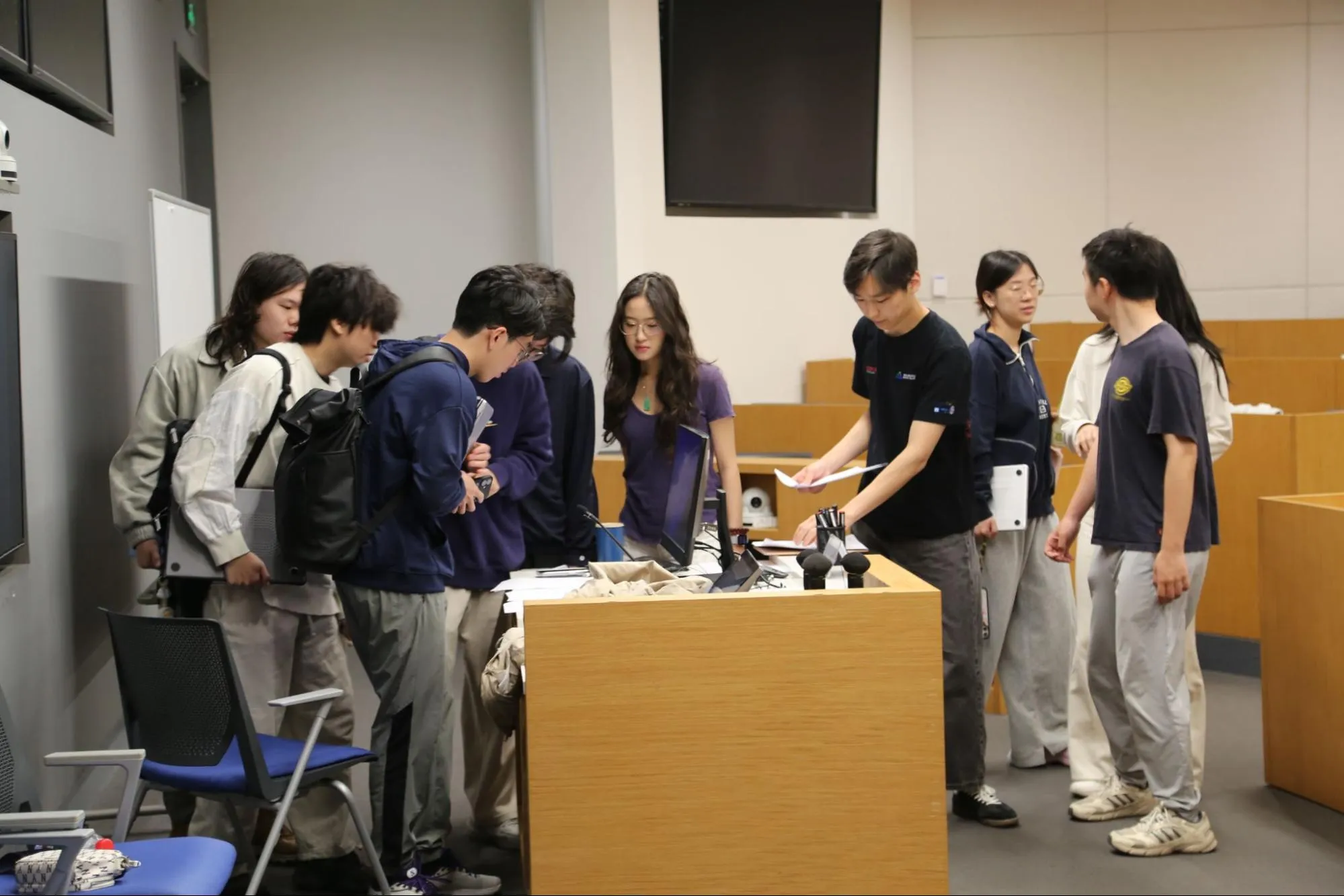
HackDKU 2026 has successfully concluded as a landmark interdisciplinary initiative, bringing together creative minds, tech enthusiasts, and ethical thinkers from diverse backgrounds and universities across China. Throughout the week-long sprint, participants transcended traditional coding and technical problem-solving to deeply explore the responsible, human-centered application of artificial intelligence. Compared to previous iterations, this year marked a remarkable leap forward, featuring a larger prize pool, expanded industry partnerships, stronger institutional support, and a significant increase in engagement, representing a comprehensive upgrade in scale, influence, and social impact.
As we close this chapter, the organizing committee aims to build on this foundation. We look forward to carrying forward the spirit of ethical innovation, deepening cross-industry and cross-academic cooperation, and continuing to build a more open, inclusive, and impactful platform for young innovators. HackDKU 2026 is more than a competition—it is a meaningful call to innovate with purpose, collaborate with heart, and transform technology with conscience.
Drafted by: Wenxin Xu, Yanpei Yu, Zhonghan Dai,Tianrui Gu
Advised by: Prof. Luyao Zhang
Supported by: Chi Zhang