
“HackDKU was a 36-hour lightning storm of ideas, where code, courage, and community all struck at once.”
Thirty-Six Hours to Build Something Real
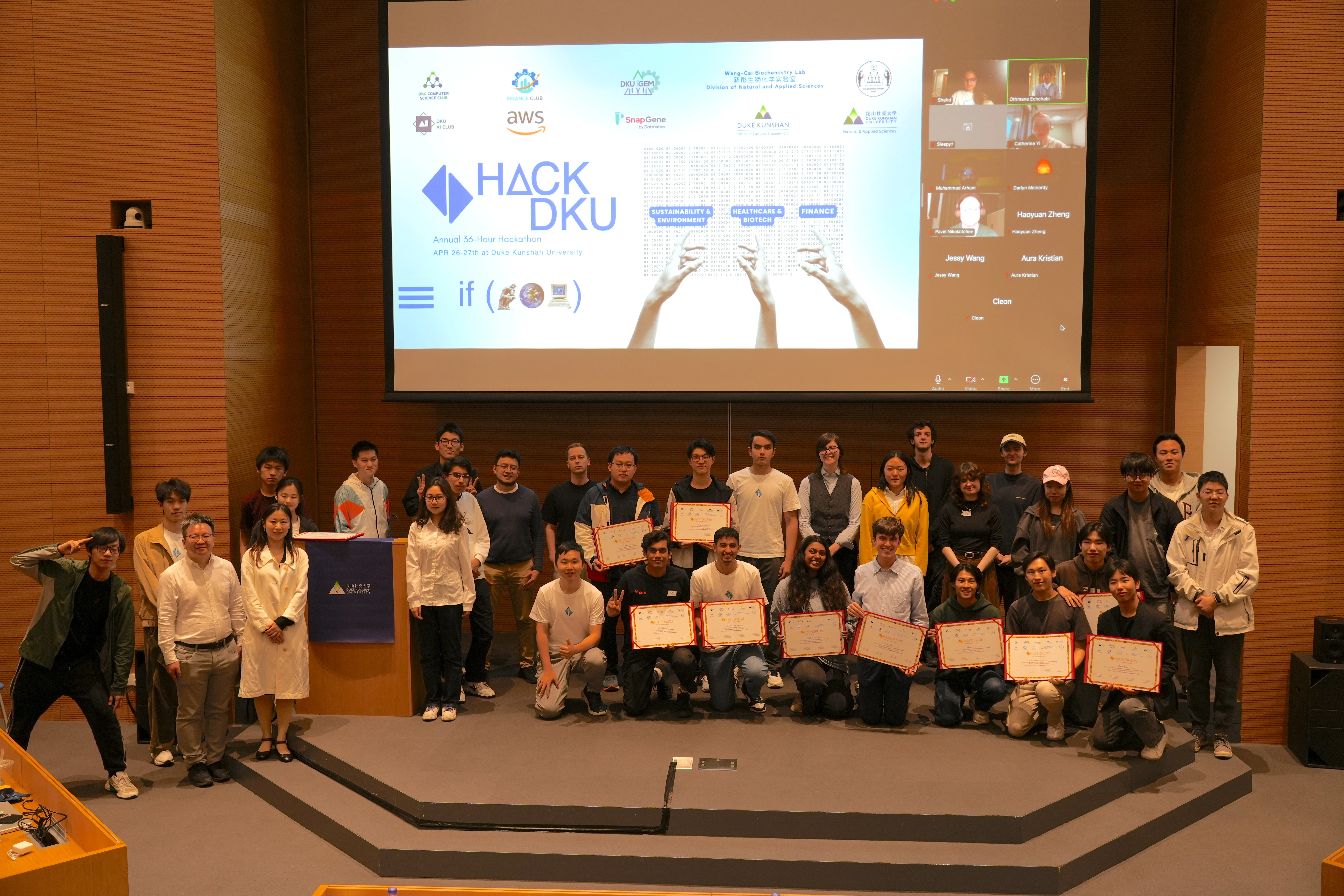
HackDKU 2025 transformed Duke Kunshan University into a live testbed for interdisciplinary innovation. Across April 26–27, coders, designers, scientists, and aspiring entrepreneurs had 36 hours to turn an early idea into a working prototype for a real-world problem. Rooted in DKU’s culture of cross-boundary learning, the weekend was never only about building apps—it was about helping ideas become concrete enough to test, demonstrate, and continue developing after the final pitch.
Innovation Tracks With Real-World Stakes
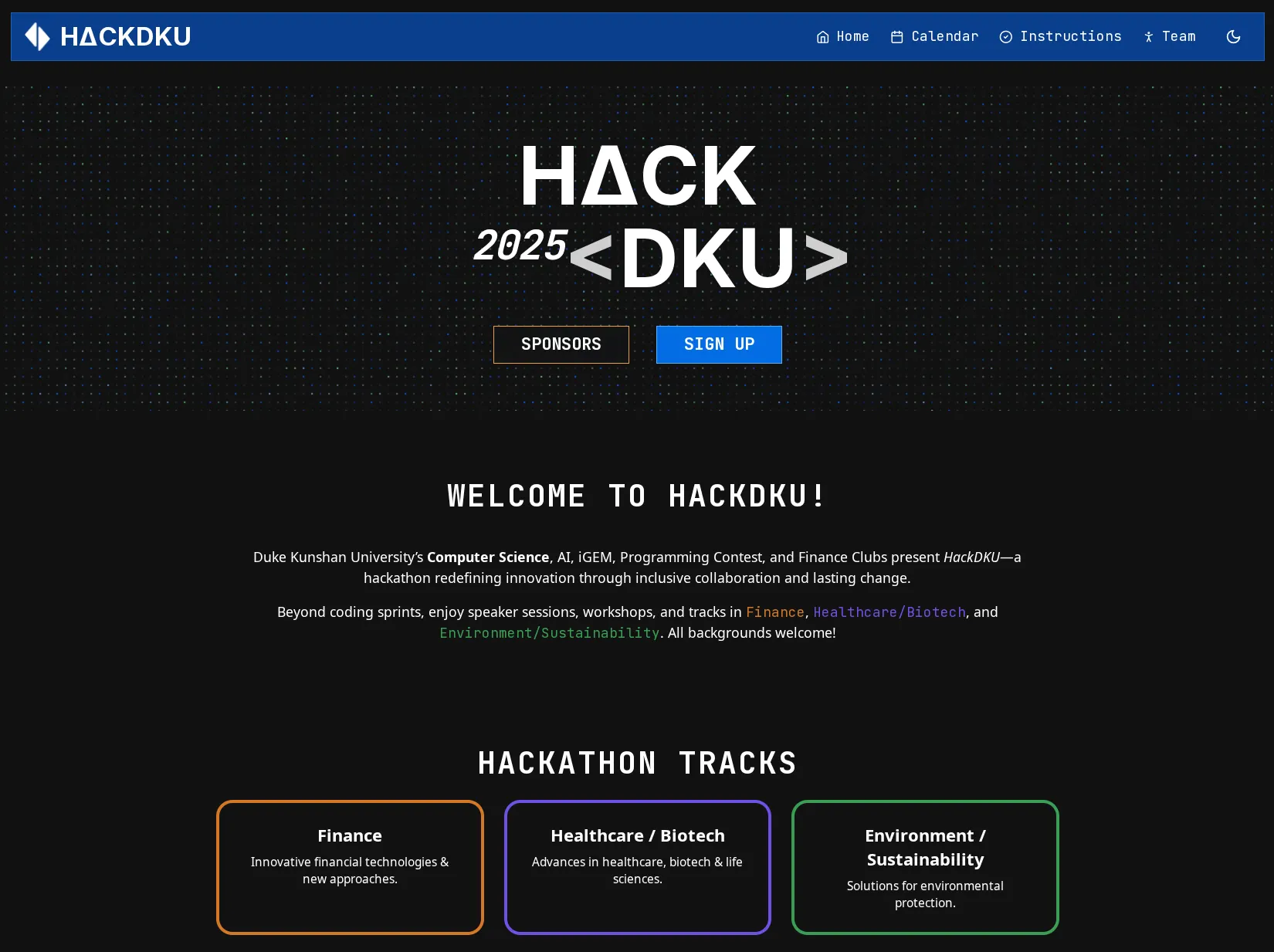
This year’s HackDKU centered around problem spaces where technology can genuinely shift the needle: Healthcare / Biotech, Finance, and Environment / Sustainability. Each track challenged teams to tackle concrete realities ranging from diagnostic bottlenecks to green transitions and financial inclusion. Teams formed around shared purpose, often mixing CS majors with life scientists, finance enthusiasts, and students of social sciences to attack problems from multiple angles.
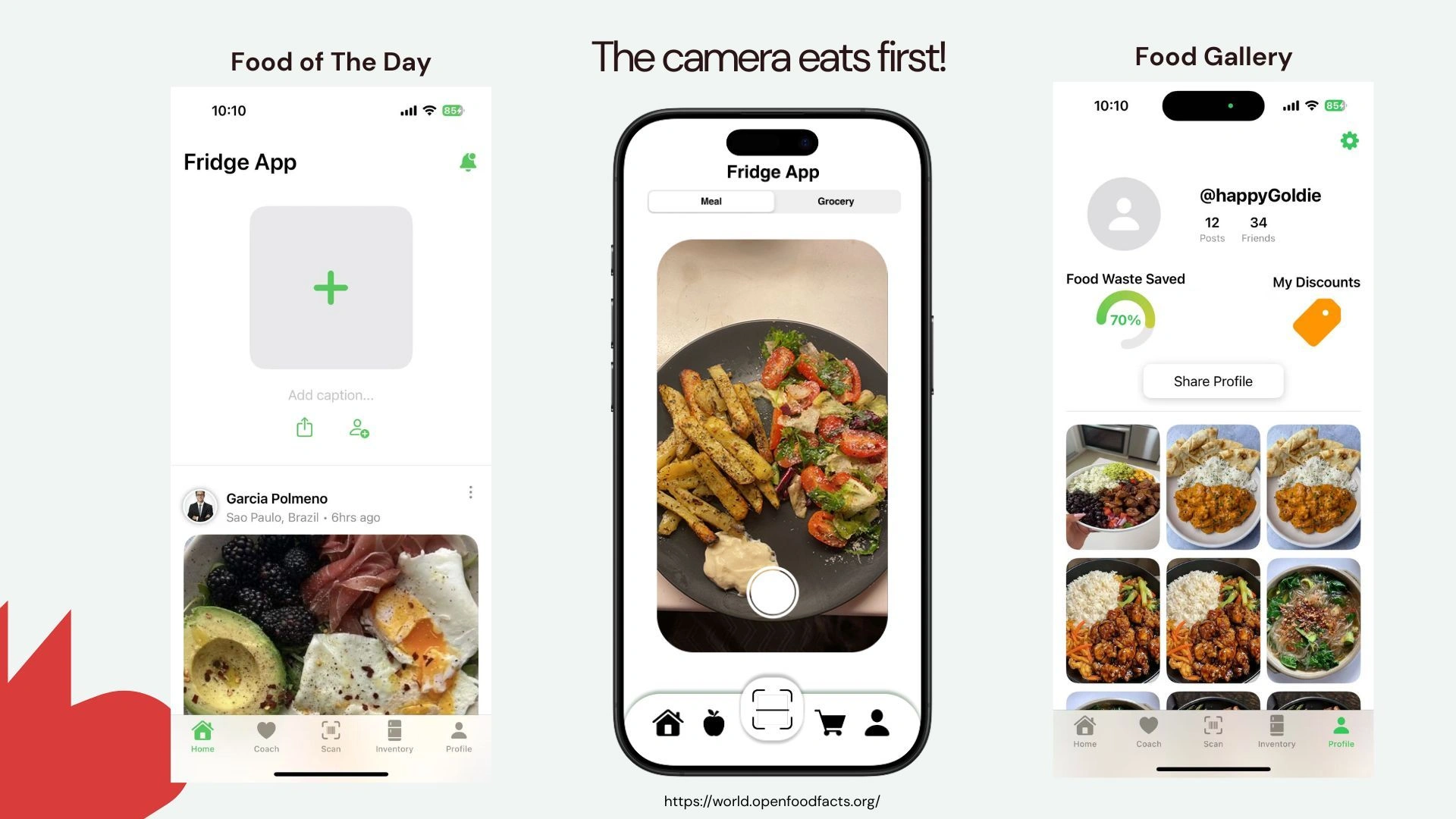
From Healthcare + Biotech came prototypes that reimagined diagnostics, decision support, and bio-data workflows, powered by both computational and biological insight. Finance-track teams explored the frontier of what AI tools could do to reshape investing, risk, and access to financial services. Environment-focused teams targeted sustainability challenges such as carbon tracking, food waste, and behavior change, showing how software can anchor more sustainable systems.
A Campus Rewired Into a Hub for Innovation
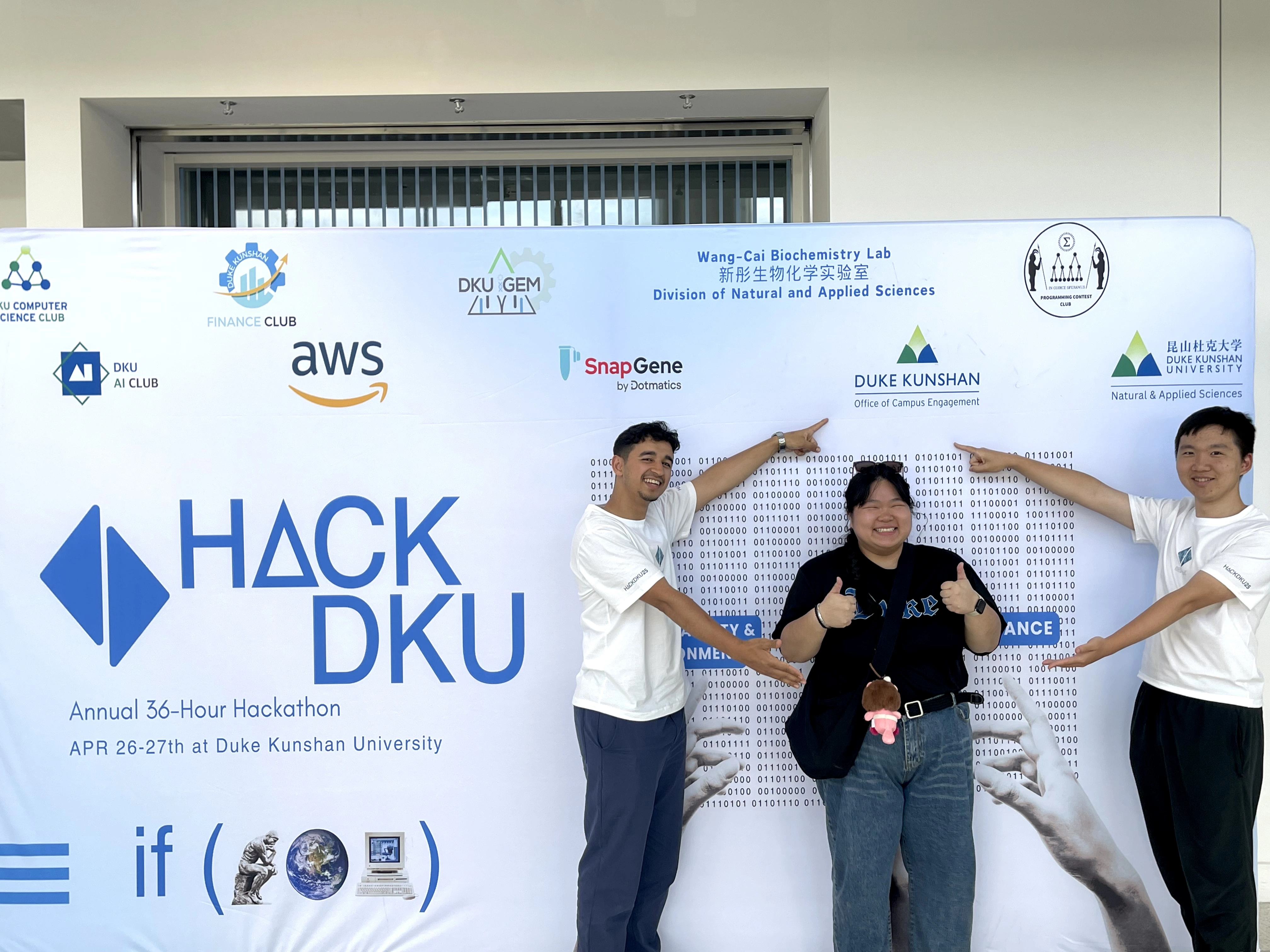
From the moment registration opened on Saturday morning, the DKU Academic Building shifted into hackathon mode. The day kicked off with an opening ceremony that set the tone: build boldly, collaborate across disciplines, and aim for impact that doesn’t stop when the prizes are handed out.
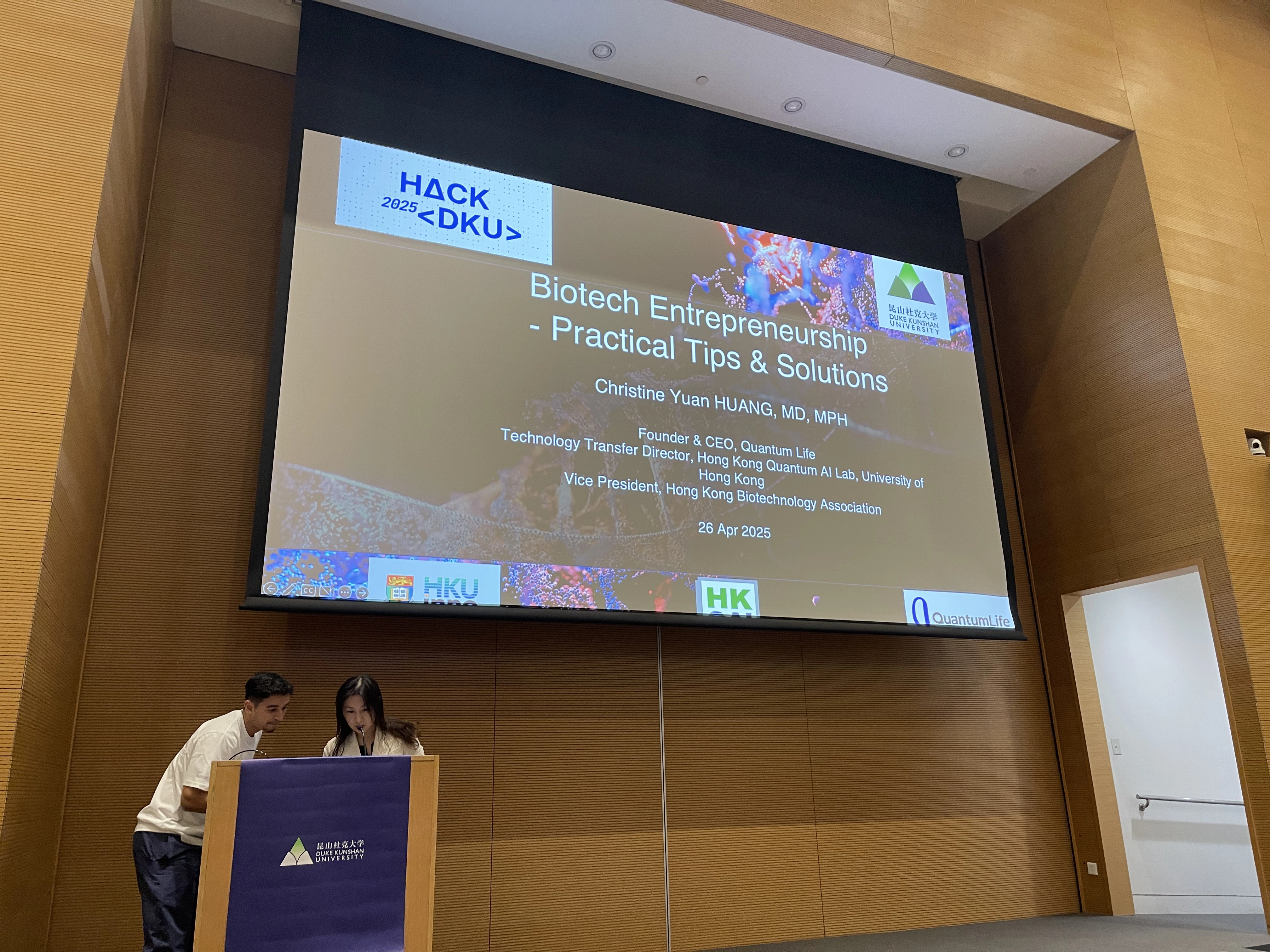
Participants then went straight into inspiration with keynote talks from leaders at the intersection of biotech, AI, and fintech. Speakers such as Dr. Christine Huang (biotech) and Lei Niu (AI/fintech) framed the weekend not just as a competition, but as a sandbox for ideas that could become startups, research projects, or campus initiatives.
Throughout Day 1, a sequence of hands-on workshops—from an AI workshop powered by AWS to a biotech-focused SnapGene session and a fintech workshop—equipped teams with practical tools to turn ambitious ideas into viable prototypes. As the formal program wound down, hacking kept going late into the night, fueled by mentor office hours that ran into the evening and gave teams targeted feedback on both technical and strategic decisions.
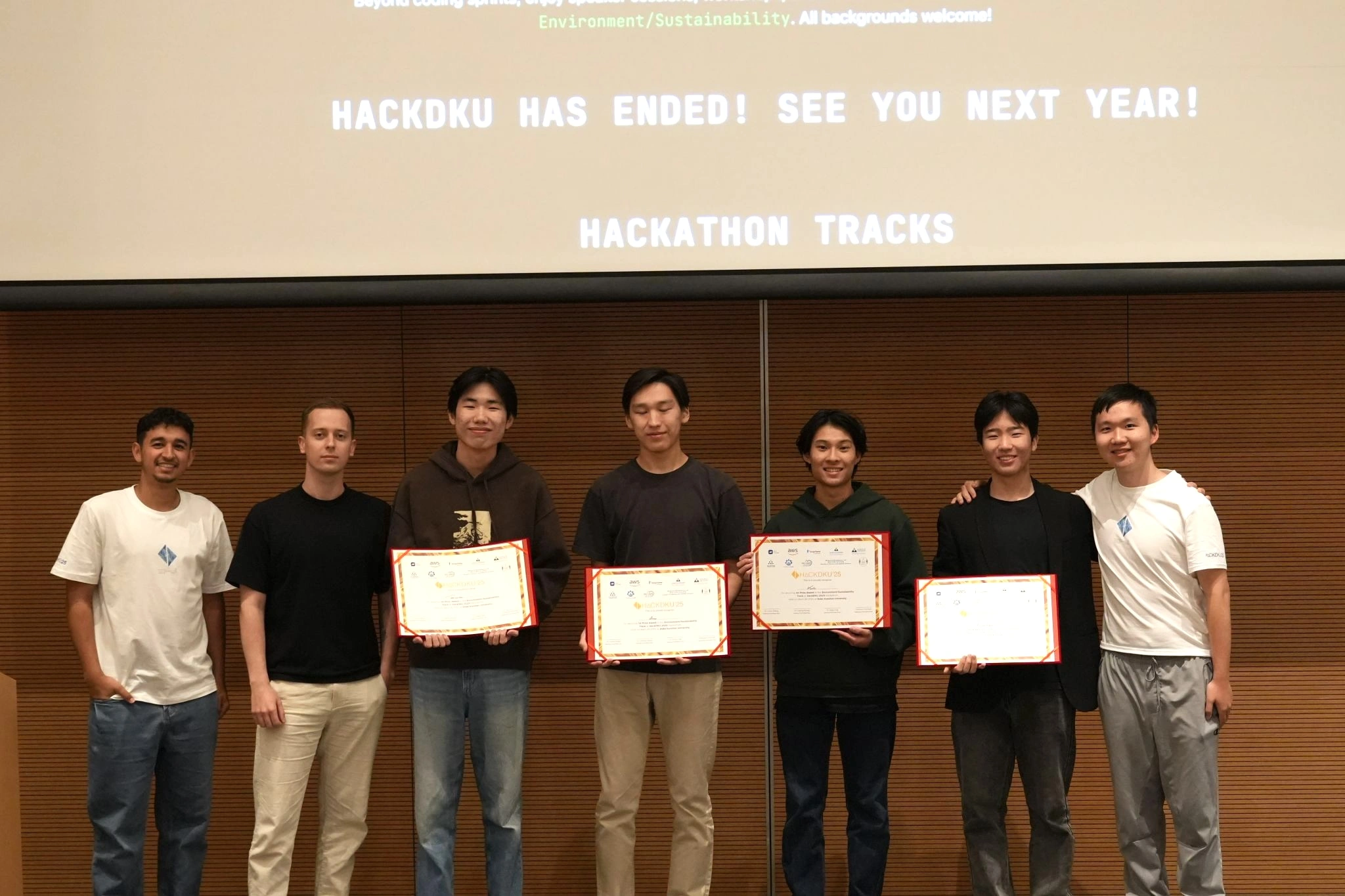
People Power: Organizers, Mentors, and Judges
HackDKU 2025 was co-led by a coalition of student organizations including the Computer Science Club, AI Club, Finance Club, iGEM Club, and Programming Contest Club, each bringing their strengths and talents to the table. This joint effort mirrored the event’s ethos: innovation happens when different communities, skills, and perspectives work in tandem.
On the evaluation side, an expert judging panel brought together technical depth, product and market insight, and investment-oriented impact analysis. Judges included leaders such as Dr. Christine Yuan Huang (biotech and life science innovation), Juan Camilo Sanabria (AI/ML engineering), and Nick Ponomarev (investment and startup impact), ensuring that every project was viewed through both a technical and real-world lens.
Teams on Stage: From Pitches to Prototypes
Across the two days, teams from DKU, XJTLU, NYUSH, and other institutions pitched prototypes that reflected both their technical abilities and their understanding of domain-specific challenges. The diversity of backgrounds—CS, biology, finance, data science, and more—translated into solutions that were technical yet grounded in real contexts.
In the final presentation block, selected teams took the stage to walk judges and peers through their journeys: problem discovery, user or stakeholder insights, design choices, technical stacks, and future plans. Each demo became a story of how constraints, mentorship, and collaboration shaped the end product.
Beyond the Weekend: Lasting Impact and Next Steps
From the beginning, HackDKU’s vision has been to go beyond “hack, demo, forget” and instead foster networks for continuous development aligned with research, industry, and community needs. The 2025 edition continued this mission, positioning promising teams to seek mentorship, refine their products, and explore pathways such as academic projects, startup incubation, or collaboration with partners.
For DKU itself, HackDKU 2025 reinforced the university’s role as a hub for cross-disciplinary innovation, connecting global perspectives with local challenges on campus, in China, and beyond. The event showcased how students can bridge theory and practice to turn classroom ideas into tangible experiments and prototypes that point toward the future.
Finally, HackDKU 2025 left an imprint that extends beyond code repositories and slide decks: stronger ties between clubs and schools, a more connected mentor and alumni network, and a community that believes innovation should be both ambitious and responsible. As teams iterate on their projects and new students join the ecosystem, HackDKU is already evolving from a single annual event into a growing culture of “hack, learn, and build for impact” at Duke Kunshan University.